

New Puppy Checklist: Everything You Need From Day One
Posted by Sierra Pet Meds on Feb 21, 2026
Bringing home a new puppy is one of life's most exciting moments — and one of the most overwhelming. A thorough prep list keeps nothing from slipping through the cracks in those hectic first days, so you can focus on bonding instead of last-minute shopping runs. Below, we've organized every essential into clear categories to help you shop smart and set your pup up for a healthy, happy start.
Feeding Essentials and Nutrition Basics for Puppies
A high-quality puppy food formulated for your dog's expected adult size is the foundation of good health. Small-breed and large-breed formulas differ in calorie density and calcium levels, so choose accordingly. If your breeder or rescue was feeding a different brand, plan a gradual transition over seven to ten days — mixing increasing amounts of the new food with the old — to avoid digestive upset.
Feeding frequency matters just as much as food quality. Most puppies under four months do best with three to four small meals per day. Between four and six months you can typically move to three meals, and by about twelve months many dogs transition comfortably to twice-daily feeding. Ask your vet to confirm a schedule based on your puppy's breed and growth rate.
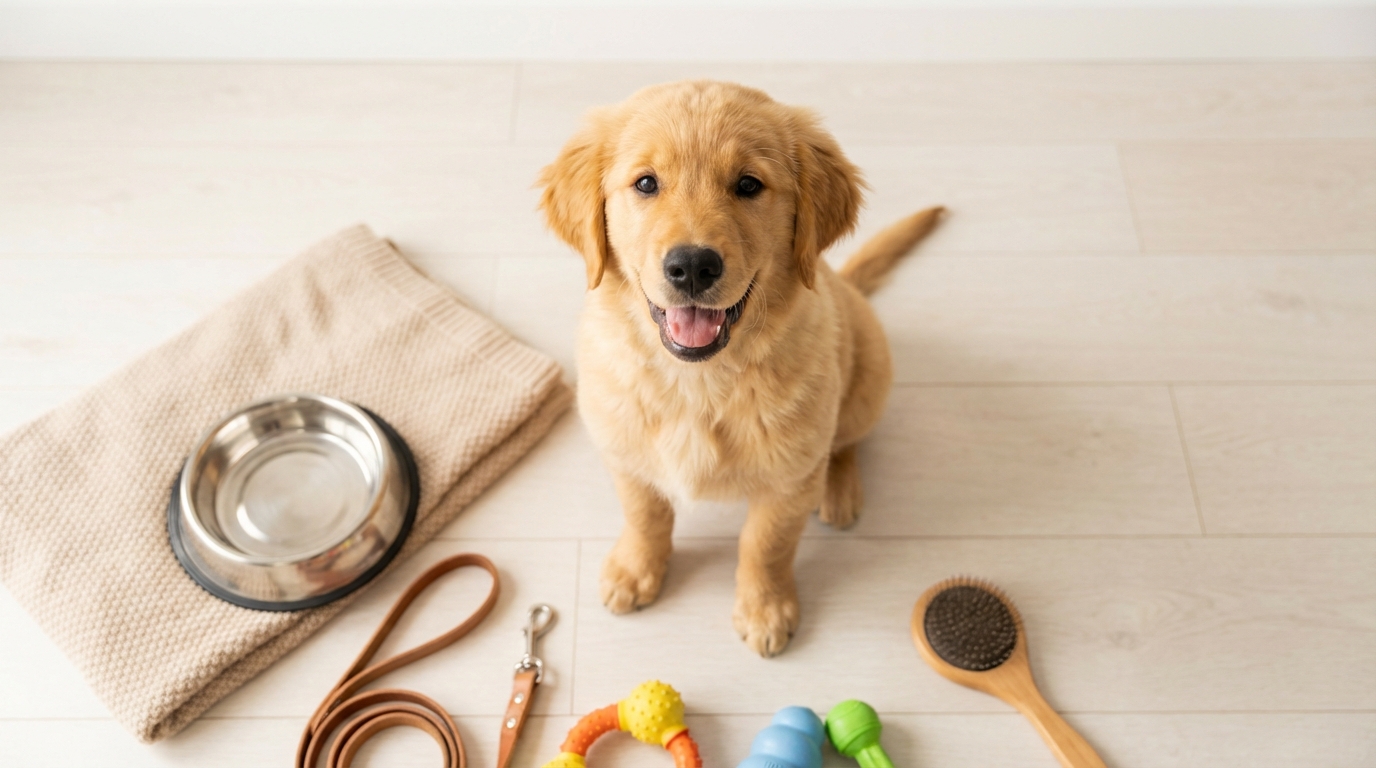
You'll also need two sturdy bowls — one for food, one for fresh water. Stainless steel or ceramic bowls are easy to sanitize and won't harbor bacteria the way plastic can over time.
Pick up a few airtight containers or bag clips to keep kibble fresh. Treats sized for small mouths are handy for early training sessions, but keep them to no more than 10 percent of your puppy's daily calories.
Setting Up a Comfortable Puppy Sleep Space
Puppies sleep up to 18 hours a day, so a cozy, safe sleeping area is near the top of any puppy essentials list. A crate sized so your pup can stand, turn around, and lie down comfortably doubles as a den and a housetraining tool.
Line the crate with a washable bed or blanket. Expect a few accidents in the first weeks, so having a spare cover on hand saves midnight laundry runs.
Place the crate in a quiet corner of a common room. Being close to the family helps your puppy feel secure without being in the middle of foot traffic.
Health and Parasite Prevention From Week One
Protecting your puppy against fleas, ticks, and heartworm should start as early as the product label allows. Parasites aren't just uncomfortable — they can transmit serious diseases to a young dog with a still-developing immune system.
Preventatives come in several forms, and knowing the main types helps you choose what fits your routine:
- Topical spot-on treatments — applied to the skin between the shoulder blades, usually on a monthly schedule. These are a popular choice for puppies that resist taking tablets.
- Oral chewables — flavored tablets or soft chews given monthly. Many puppies accept them as treats, making dosing straightforward.
- Long-acting oral options — some newer chewables protect against fleas and ticks for up to three months per dose, which means fewer dates to remember on the calendar.
- Heartworm preventatives — available as monthly chewables or topicals. Some formulas also cover common intestinal worms, giving you broader protection in a single product.
Browse our full range of puppy supplies to find age-appropriate flea, tick, and heartworm preventatives you can order without hassle. Starting prevention early is far simpler — and cheaper — than treating an infestation after the fact.
Keep a small first-aid kit at home as well. Cotton gauze, antiseptic wipes, a digital thermometer, and blunt-tipped scissors cover most minor situations until you can reach professional help.
Quick tip: Write down your puppy's weight every two weeks. Accurate weight records help you adjust parasite prevention dosing as your pup grows — and catch unexpected weight changes early.
Puppy Training Supplies and Safety Gear
Figuring out what to buy for a new puppy goes well beyond food and bedding. A flat collar with an ID tag and a lightweight leash (about 1.5–1.8 meters) are non-negotiable for safe outings and early leash manners.
Stock up on puppy-safe chew toys to redirect teething urges away from furniture. Look for toys labeled for the appropriate chew strength — a plush toy that's perfect for a Maltese won't survive five minutes with a Labrador pup.
Enzymatic cleaner is your secret weapon for housetraining accidents. It breaks down odor at a molecular level, so your puppy isn't drawn back to the same spot. Puppy pads can also help during the initial transition, especially for very young dogs.
A baby gate or exercise pen lets you limit access to one room while your puppy learns household rules. Puppy-proofing — tucking away electrical cords, locking low cabinets, removing toxic houseplants — is just as important as any product you purchase.
Puppy Grooming Tips and Hygiene Basics
Even short-coated breeds benefit from early grooming sessions. A soft-bristle brush and puppy-formulated shampoo are enough to start with. The goal at this stage is to build positive associations with handling rather than achieve a show-ring finish.
Add a pair of nail clippers or a small nail grinder to your list. Frequent, gentle nail trims prevent painful overgrowth and keep your puppy comfortable on hard floors.
Dental health matters from day one, too. A finger brush or puppy toothbrush paired with dog-safe toothpaste sets the stage for a lifetime of healthy teeth. Short, reward-heavy sessions work best while your pup is still learning to tolerate mouth handling.
Need to round out your supplies? Our complete dog shop carries everything from preventative treatments to everyday care products, all in one place.
Frequently Asked Questions
When should I start flea and tick prevention on my puppy?
Most topical and oral preventatives can be started once a puppy reaches the minimum age and weight stated on the product label — often as young as six to eight weeks. Starting early helps you stay ahead of parasites before they become a problem. Your vet can recommend the best product type for your puppy's breed, size, and lifestyle, so bring it up at that first wellness visit.
Do I need separate products for heartworm and flea prevention?
It depends on the product. Some monthly heartworm preventatives also cover common intestinal worms like roundworms and hookworms, but they may not include flea or tick protection. In many cases, you'll pair a heartworm preventative with a separate flea-and-tick product. Check the label's coverage details or ask your vet which combination provides the broadest protection with the fewest doses.
How many toys does a new puppy actually need?
Three to five toys in different textures — a chew toy, a rope toy, a soft toy, and a puzzle feeder — give your puppy enough variety without cluttering the house. Rotate them every few days to keep things interesting. Introducing one new texture at a time also helps you learn which materials your pup prefers and which hold up best to their chewing style.
What's the most commonly overlooked item on a puppy essentials list?
Enzymatic cleaner. Housetraining accidents are inevitable, and standard household cleaners don't fully eliminate the scent markers that draw puppies back to the same spot. Having a bottle ready before your puppy arrives saves frustration. A close second is a digital thermometer — it's a first-aid basic that many owners don't think about until they need one urgently.
A well-prepared home makes the transition smoother for both you and your new companion. If you haven't already, have a quick chat with your vet to tailor a vaccination and prevention schedule to your puppy's breed and lifestyle. Then head over to our puppy supplies collection to tick off the health essentials on your list — all available to order and ship straight to your door.