
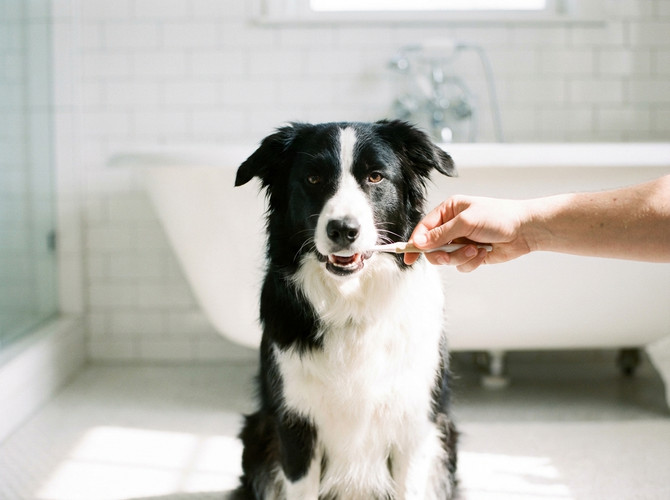
How to Brush Your Dog's Teeth: A Step-by-Step Guide
Posted by Sierra Pet Meds on May 13, 2025
Learning to brush your dog's teeth is one of the simplest ways to protect their long-term health. Poor dental hygiene in dogs can lead to painful infections, tooth loss, and even organ damage—yet most pet owners skip this routine entirely. The good news? With the right approach, toothbrushing can become a quick, stress-free habit for both of you.
Why Dental Hygiene Matters for Dogs
By the age of three, most dogs already show some degree of dental disease. Bacteria from plaque and tartar buildup don't just stay in the mouth—they can enter the bloodstream and affect the heart, kidneys, and liver over time.
Good dog dental hygiene does more than keep breath fresh. It prevents gingivitis, reduces the risk of tooth extractions, and can add years to your pet's life. Prioritizing oral care is just as important as staying on top of preventive health products like flea and heartworm prevention.
What You Need Before You Start
Gather your supplies before you bring your dog into the picture. Having everything ready reduces stress and keeps the session short.
- Dog-specific toothpaste — Never use human toothpaste. Ingredients like xylitol and fluoride are toxic to dogs. Pet toothpastes come in flavors like poultry and beef that dogs actually enjoy.
- A soft-bristled dog toothbrush — Finger brushes work well for small breeds or beginners. Standard long-handled brushes suit medium and large dogs.
- Treats — Small, high-value rewards help build a positive association with each session.
Skip hard bones or antlers marketed as dental chews—these can fracture teeth. Stick with products specifically designed for safe oral care.
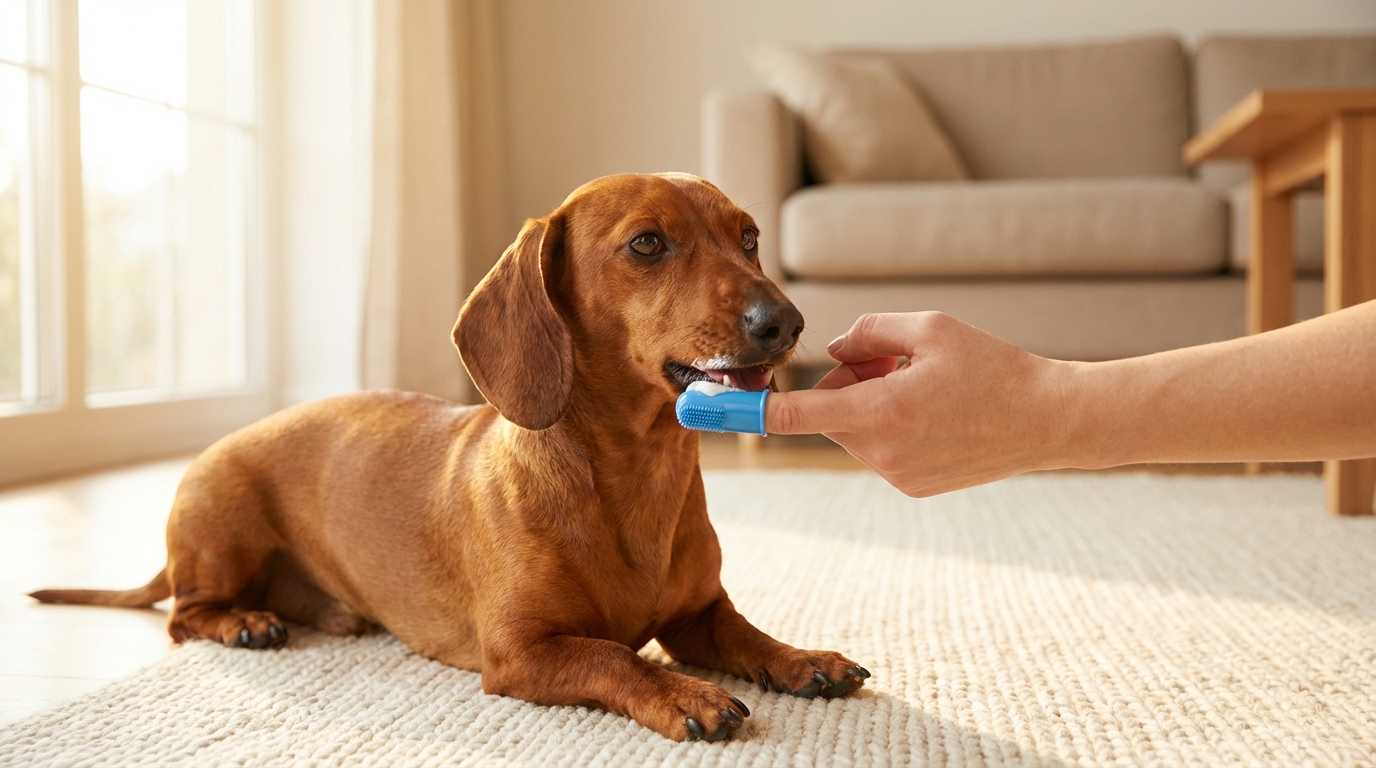
Step-by-Step: How to Brush Your Dog's Teeth
Don't rush. The first few sessions are about building trust, not achieving a perfect clean. Here's how to ease into it:
1. Let your dog taste the toothpaste. Squeeze a pea-sized amount onto your finger and let them lick it. Reward them. Do this for a day or two until they're eager for the flavor.
2. Touch the gums and teeth. With a small amount of toothpaste on your finger, gently rub along the outer surfaces of the front teeth. Keep it under 30 seconds. Praise and treat.
3. Introduce the brush. Once your dog is comfortable with finger contact, switch to the toothbrush. Angle the bristles at 45 degrees toward the gumline and use small circular motions.
4. Work from front to back. Start with the canines and front teeth, then gradually move to the premolars and molars. The outer surfaces matter most—saliva naturally cleans the inner surfaces to some extent.
5. Keep sessions short. Aim for under two minutes. It's better to brush a few teeth well than to force a full-mouth session and create a negative experience.
Quick tip: If your dog pulls away, stop and try again later. Forcing the issue makes future sessions harder. Consistency beats perfection—even 30 seconds of brushing is better than none.
How Often Should You Brush?
Daily brushing is the gold standard. Plaque begins to harden into tartar within 24–48 hours, so daily removal is the most effective way to keep teeth clean.
If daily brushing isn't realistic, aim for at least three to four times per week. This frequency still provides meaningful protection against plaque buildup and gum disease.
Pair regular brushing with a broader preventive care routine. Just as you'd schedule regular health products for your dog to manage parasites, consistent dental care should be a non-negotiable part of pet ownership.
Signs of Dental Problems to Watch For
Even with regular brushing, it's important to know when something needs professional attention. Watch for these warning signs:
- Persistent bad breath — A foul smell that doesn't improve with brushing may indicate infection below the gumline.
- Red, swollen, or bleeding gums — Healthy gums should be pink and firm. Inflammation is an early sign of periodontal disease.
- Drooling, pawing at the mouth, or dropping food — These behaviors often signal oral pain or a damaged tooth.
- Visible tartar or discoloration — Yellow-brown buildup along the gumline means tartar has formed and may need professional removal.
- Reluctance to eat or chew — A sudden change in eating habits warrants a closer look at their teeth.
Catching these signs early can prevent more invasive and costly procedures down the road.
Frequently Asked Questions
What age should I start brushing my dog's teeth?
Start as early as possible—ideally during puppyhood when they're most adaptable to new routines. Even before adult teeth come in, gentle gum massages with your finger get them used to mouth handling. Adult dogs can absolutely learn to accept brushing too; it just may take a few extra days of patience.
Can I use coconut oil instead of dog toothpaste?
Coconut oil is sometimes used as a natural alternative, but it doesn't contain enzymes designed to break down plaque the way veterinary toothpastes do. For the best results, use a toothpaste formulated specifically for dogs. The flavoring also makes the experience more enjoyable for your pet.
My dog won't let me near their mouth. What should I do?
Go slower. Spend several days just rewarding your dog for letting you touch their muzzle and lift their lip. Gradually introduce toothpaste on your finger before ever using a brush. Some dogs take a week or more to warm up, and that's completely normal.
Keeping your dog's teeth clean is a small daily investment that pays off in healthier, happier years together. If you ever notice signs of dental disease that don't improve, have a chat with your vet for a professional assessment. In the meantime, explore our full range of dog health products to keep every part of your pet's wellness covered.