
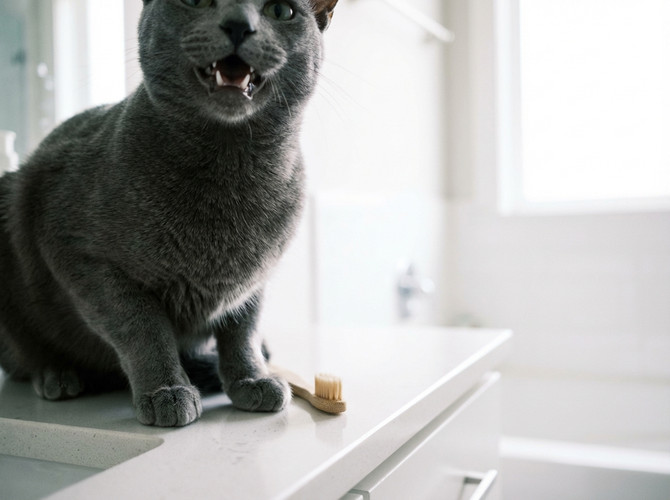
Cat Dental Care: Why Most Owners Overlook It
Posted by Sierra Pet Meds on Aug 02, 2025
When it comes to dental care for cats, most owners don't realize there's a problem until their pet stops eating or develops bad breath. Studies suggest that the majority of cats over three years old already have some form of dental disease — yet routine cat teeth cleaning remains one of the most neglected aspects of feline health.
Why Cat Dental Problems Go Unnoticed
Cats are masters at hiding discomfort. Unlike dogs, who may whine or paw at their mouths, a cat with a painful tooth will often just eat less or chew on one side — subtle shifts that are easy to miss during a busy week.
Another reason dental care for cats falls through the cracks is the assumption that dry kibble "cleans" teeth on its own. While crunchy food can reduce some surface tartar, it doesn't prevent plaque from building up along the gum line where most disease starts.
Finally, many owners simply haven't been told that feline dental health requires active attention. It's not part of the typical "new kitten" conversation, so it slips off the radar entirely.
Signs Your Cat May Have Dental Disease
Bad breath is the most obvious red flag, but it's far from the only one. Watch for drooling, red or swollen gums, and brownish tartar buildup on the teeth — especially the back molars, which are hardest to see.
Behavioral changes matter too. A cat that suddenly prefers wet food over dry, drops food while eating, or resists having its face touched could be dealing with mouth pain.
In advanced cases, you might notice loose teeth, bleeding gums, or even facial swelling. Left unchecked, oral bacteria can enter the bloodstream and affect the heart, kidneys, and liver — making early detection essential.
How to Clean Your Cat's Teeth at Home
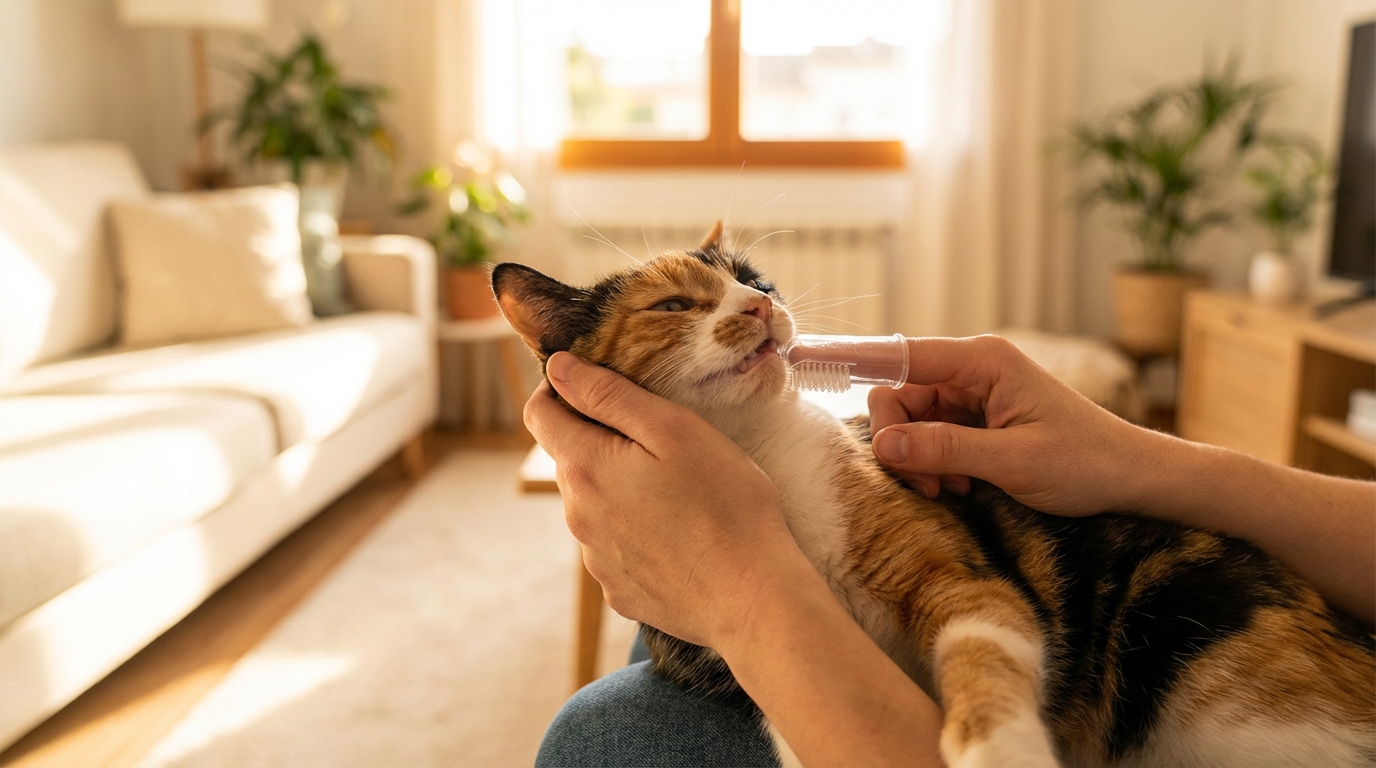
Brushing your cat's teeth sounds daunting, but with patience it becomes a manageable routine. Start by letting your cat taste a small amount of pet-safe enzymatic toothpaste on your finger for a few days before introducing a brush.
Use a soft-bristled finger brush or a small cat toothbrush angled at 45 degrees to the gum line. Focus on the outer surfaces of the teeth — that's where plaque accumulates fastest. Sessions don't need to be long; even 30 seconds a few times a week makes a noticeable difference.
Quick tip: Never use human toothpaste on cats. It contains fluoride and foaming agents that are toxic if swallowed. Always choose a toothpaste formulated specifically for pets.
If your cat absolutely refuses a brush, dental wipes or water additives can serve as a secondary line of defense. They won't replace brushing entirely, but they help reduce bacterial buildup between cleanings.
Products That Support Feline Dental Health
Beyond the toothbrush, several products can complement your cat's dental care routine. Dental treats and chews designed for cats encourage gnawing action that scrapes light plaque from tooth surfaces.
Oral rinses and water additives containing enzymes can help control bacteria in the mouth without any brushing effort. These are especially useful for cats that resist handling around the face.
You can browse a wide selection of health and wellness products in our cat shop, including items that support overall feline well-being alongside dental health. Keeping your cat's preventive care — from parasite protection to oral hygiene — in one place simplifies the process considerably.
Building a Simple Prevention Routine
The best approach to cat dental care is consistency, not perfection. Aim to brush two to three times per week, supplement with dental treats on off-days, and do a quick visual check of your cat's mouth once a month.
Pair dental care with other preventive habits you're already maintaining. If you're applying a monthly flea or heartworm preventive, use that same day as your reminder to inspect your cat's teeth and gums. You'll find all the preventive products for cats you need to keep that schedule running smoothly.
Keep a simple log — even a note on your phone — tracking when you last brushed, any changes in eating behavior, and the condition of the gums. This kind of record is invaluable if you ever need to discuss concerns with a veterinarian.
Frequently Asked Questions
At what age should I start cleaning my cat's teeth?
The earlier the better. Kittens can be introduced to tooth brushing as young as a few months old. Starting early gets them accustomed to having their mouth handled, making the process far easier as they grow.
Can dental disease in cats be reversed?
Gingivitis — the earliest stage — can often be reversed with consistent cleaning and plaque removal. However, once the disease progresses to periodontitis and bone loss, the damage is permanent. That's why prevention and early intervention matter so much.
How do I know if my cat needs a professional dental cleaning?
If you notice heavy tartar buildup, persistent bad breath, red or bleeding gums, or any loose teeth, a professional cleaning under anesthesia may be warranted. Your vet can assess the severity and recommend the right course of action.
Don't let dental problems sneak up on your cat. Start a simple at-home routine today, and stock up on everything your feline needs — from parasite prevention to wellness essentials — in our complete cat shop. If you're ever unsure about your cat's oral health, have a chat with your vet for personalized guidance.