

Deer tick season is not just a summer concern. Adults often become more noticeable in spring and fall, while tiny nymphs can be a bigger challenge in late spring and summer. Weather and habitat affect that timing, so no month is reliably tick-free. Use this month-by-month guide to plan walks, tick checks, and consistent prevention for your dog.
Deer Tick Season: Adults vs. Nymphs
Deer ticks, also called blacklegged ticks, can transmit the bacteria that cause Lyme disease. Adults are easier to spot than nymphs, which can be as small as a poppy seed and disappear beneath a dog's coat. Both stages deserve attention during tick checks.
The calendar below describes common activity patterns, not fixed start and stop dates. Actual timing varies with weather and habitat, and stages can overlap. Sheltered leaf litter, moisture, and mild spells can affect exposure. Treat each month as a reminder to review your routine, not a guarantee about which ticks are present.
January–April: Winter Thaws and Spring Adults
January: Freezing conditions often reduce tick activity, but they do not eliminate ticks. Adult blacklegged ticks may seek a host during mild spells, especially on snow-free ground. Keep checking your dog after outdoor time rather than relying on the calendar.
February: Snow can insulate ticks beneath it rather than kill them, and leaf litter provides shelter. A cold week does not prove that your next walk will be tick-free. Review your prevention supply so an unexpected delay does not interrupt the labeled schedule.
March: As conditions warm, adult activity can increase. Waiting until you find a tick before restarting protection can leave a gap. If your dog's prevention has lapsed, ask your veterinarian how to resume it safely rather than improvising or combining products.
April: Adults are often active around wooded edges, brush, and leaf piles. After walks, check around your dog's ears, collar, armpits, groin, and between the toes. Run your hands over the rest of the body and investigate any small bumps.
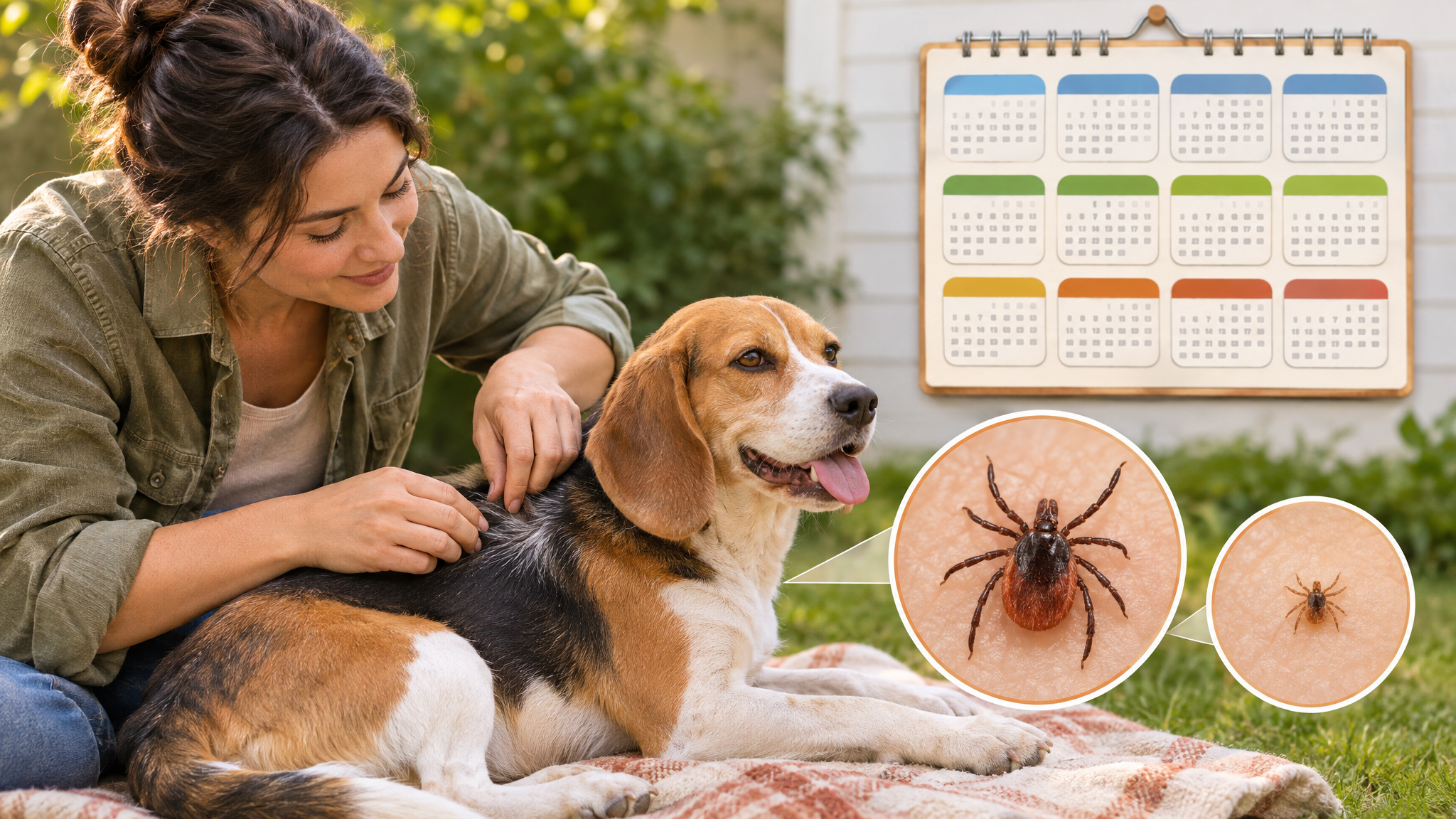
May–August: Watch for Tiny Nymphs
May: Nymph exposure can rise in late spring while some adults remain active. Because nymphs are tiny, a quick glance is not enough. Part your dog's coat in sections and use your fingertips to feel close to the skin.
June: Nymph activity is often high, making missed ticks a particular concern. Keep your dog away from brush beside trails when practical. Check after yard time as well as woodland walks, especially if your dog explores vegetation or leaf litter.
July: Nymphs can remain active through summer, particularly in sheltered, moist places. A hot afternoon does not make shaded trail edges tick-free. Keep prevention and checks consistent, and follow product directions concerning bathing or swimming if your dog enjoys water.
August: Nymph activity may taper, but exposure does not disappear on a set date. Other tick species can also be active. Review the tick species listed on your dog's preventive label instead of assuming every flea treatment provides the same coverage.
Quick tip: Keep fine-tipped tweezers beside the leash, and make a hands-on tick check part of your routine after every outing—even when prevention is up to date.
September–December: Adults Return
September: Adult activity may begin building again as fall approaches. Continue protection even if you noticed fewer ticks during late summer. Clear accumulated leaves from your dog's regular play area, while remembering that yard maintenance does not replace prevention or checks.
October: Fall can be a major adult activity period, not the end of tick season. Leaf-covered yards, wooded edges, and brushy paths deserve careful checks. Choose clearer walking routes where possible to reduce contact with vegetation along the trail.
November: Adults may remain active until sustained cold limits movement. A single frost is not a dependable cutoff, and sheltered spots can remain suitable for ticks. Keep treatment reminders active rather than stopping protection because temperatures have dropped once.
December: Cold spells can interrupt activity without ending exposure. Maintain the prevention schedule recommended by your veterinarian and the product label. Check after outings during thaws, paying particular attention when your dog has explored snow-free edges or leaf piles.
Choose Protection That Fits Your Dog
Choose dog flea and tick prevention by more than price or pack size. Start with your dog's current weight, age, and health history, then compare what each label covers.
- Tick coverage: Confirm blacklegged ticks appear on the label. Flea or heartworm protection alone does not establish tick coverage.
- Product format: Compare oral, topical, and collar options against label directions, health warnings, and your dog's routine.
- Repeat schedule: Note the treatment or replacement interval and set a reminder before the next date is due.
- Household fit: Use only products labeled for the animal being treated, and follow warnings about contact with other pets.
For mixed-pet homes, choose cat parasite protection separately and check any tick claims. Never apply a dog product to a cat; some dog tick treatments are highly toxic to cats.
Frequently Asked Questions
Can my dog encounter deer ticks in winter?
Yes. Adult blacklegged ticks can become active during mild spells, particularly on snow-free ground. Cold weather alone is not a dependable reason to stop protection or skip checks after outdoor time.
Do preventives mean I can skip tick checks?
No. Ticks can still be found on protected dogs, and killing or repelling performance depends on the product. Continue checks after outdoor exposure and follow the full label schedule rather than waiting until you see a tick.
How should I remove an attached tick?
Use fine-tipped tweezers to grasp the tick close to the skin and pull upward with steady, even pressure. Clean the bite area and your hands afterward. Do not twist, burn, or coat the tick in oil. Contact your veterinarian if removal is difficult or your dog becomes unwell.
Shop dog flea and tick prevention at Sierra Pet Meds to compare options for consistent protection. If you need help choosing, talk to your veterinarian.