

Finding the best puppy food starts with one goal: steady growth without overloading a small stomach. The right early puppy diet supports healthy bones, brain development, and consistent energy. Below is a practical feeding a puppy guide to help you choose wisely from day one.
What to look for in puppy food labels
When you’re shopping for the best puppy food, start with the nutrition statement on the bag or can. Look for a formula intended for growth (or “all life stages”) from a reputable manufacturer with clear quality controls.
- Complete and balanced for growth: This indicates the food is formulated to meet a puppy’s needs, not just “supplemental feeding.”
- Named animal protein as a key ingredient: Puppies need protein for muscle and tissue growth; “chicken,” “turkey,” or “salmon” is clearer than vague “meat.”
- Healthy fat sources: Fat supports energy and skin/coat health; omega-3s (often from fish oil) also support brain and eye development.
- Appropriate calcium and phosphorus: Balanced minerals are critical for developing bones and joints, especially in fast-growing pups.
Dry kibble is convenient and helps with routine; wet food can be more enticing and hydrating. Many owners do well with a mixed approach, as long as the total daily calories stay consistent.
Match food to life stage and adult size
Your puppy diet should fit not just age, but expected adult size. Small-breed puppies burn energy quickly and may do best with smaller kibble pieces and higher calorie density, while large-breed puppies need controlled growth to support joints.
- Large-breed puppy formulas: Often have carefully balanced calories and minerals to promote steady growth rather than rapid weight gain.
- Small-breed puppy formulas: Typically offer smaller kibble and energy-dense nutrition for tiny stomachs.
- Medium-breed options: Great “middle ground” for pups expected to land between the extremes.
If you’re unsure which category fits, estimate adult weight using the parents’ size (or shelter/vet estimate) and pick a formula aligned to that range. Also consider your puppy’s lifestyle: highly active pups may need slightly more food, while calm couch companions may need less.
New puppy essentials go beyond the bowl. Stock up on safe chews, training treats, and basics from our puppy supplies collection so mealtimes and reward training stay consistent.
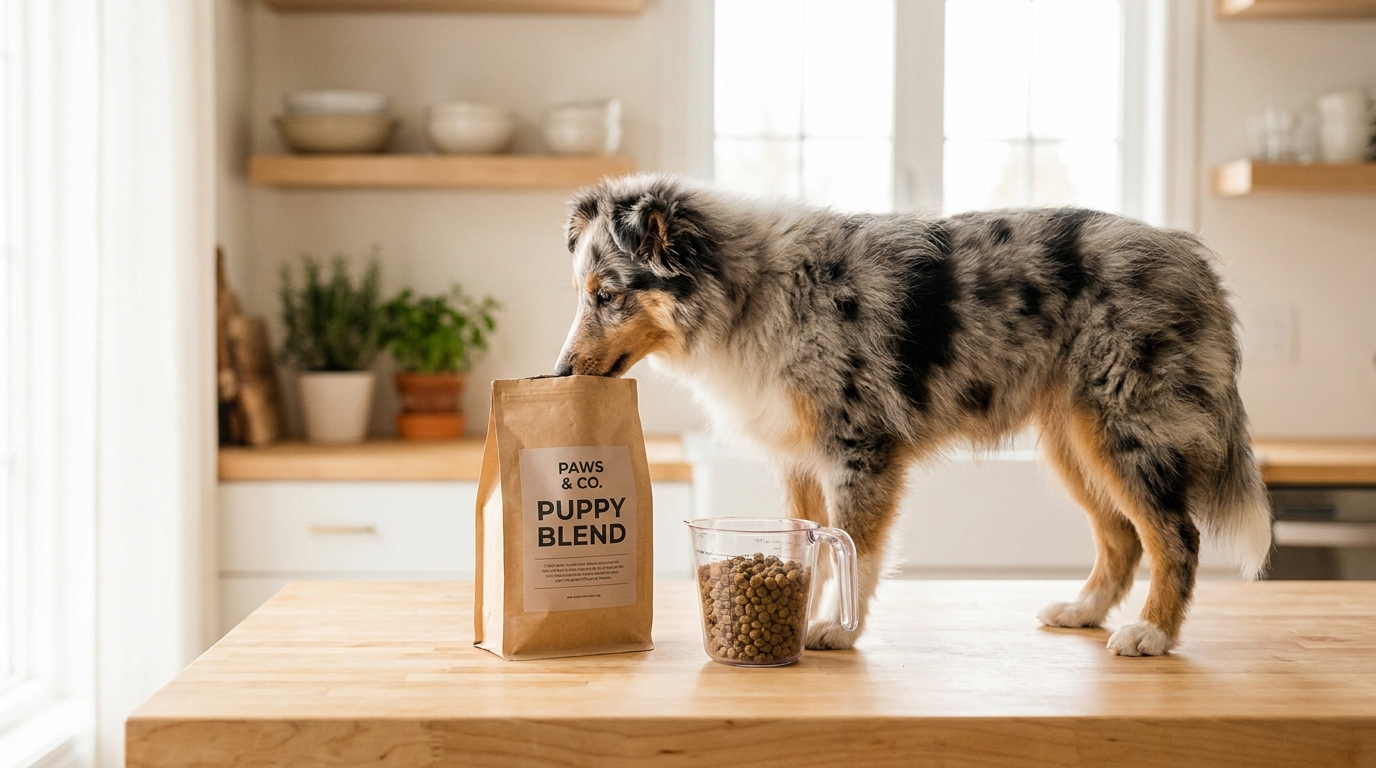
How much and how often to feed
Portion size matters as much as food choice. Overfeeding can lead to loose stool, excess weight, and messy mealtime habits; underfeeding can slow growth and reduce energy.
- Use the feeding chart as a starting point: It’s based on expected adult size and age, but your puppy is an individual.
- Watch body condition: You should be able to feel ribs with light pressure, and see a waist from above.
- Keep a schedule: Regular mealtimes support digestion and make potty training easier.
Most puppies do best with multiple meals per day early on, then gradually fewer meals as they mature. If your pup acts ravenous, don’t automatically increase food—first confirm you’re measuring correctly and that treats aren’t inflating calories.
Quick tip: Measure meals with a real measuring cup or kitchen scale for a week. “Eyeballing” portions is one of the fastest ways to accidentally overfeed a growing puppy.
Make feeding time calm. Put the bowl down for a set time, then pick it up—this prevents grazing and helps you notice appetite changes early.
Switching foods and preventing tummy trouble
Puppies have sensitive digestive systems, and sudden changes can cause gas, vomiting, or diarrhea. If you’re changing brands, moving from wet to dry, or upgrading to what you think is the best puppy food, do it gradually.
- Transition slowly: Mix a small amount of the new food into the old, increasing the new portion over 7–10 days.
- Keep everything else steady: Avoid introducing new treats, chews, or rich table foods during the switch.
- Hydration matters: Always provide fresh water; consider adding a splash of warm water to kibble for picky pups.
If loose stool shows up during the transition, pause at the last “successful” mix ratio for a couple of days before increasing again. For pups who inhale meals, a slow feeder can reduce gulping and help prevent upset stomach.
While you’re building healthy routines, it’s also a smart time to prep your home with essentials from our puppy supplies section, like gentle grooming tools and safe training aids that support consistent care.
Treats, toppers, and supplements: what’s helpful (and what’s not)
Treats are great for training, but they can quietly throw off a puppy diet if they become a major calorie source. Keep treats small, soft, and easy to chew, especially during teething.
- Keep treat calories modest: Use tiny pieces and reward frequently rather than giving big treats.
- Be cautious with rich toppers: Heavy gravies and fatty add-ons can cause loose stool and picky eating.
- Skip unnecessary supplements: A complete growth formula typically doesn’t need extras; adding calcium or multivitamins can unbalance nutrition.
If your puppy has specific needs—like frequent itching, recurring tummy sensitivity, or slow weight gain—focus first on food quality, consistency, and accurate portions. Then reassess after a couple of weeks before adding more variables.
Frequently Asked Questions
How do I know if my puppy is eating the right amount?
Look for steady growth, good energy, and firm (not hard) stools. Use the feeding chart as a baseline, then adjust based on body condition—ribs should be easy to feel but not prominently visible.
Is dry food or wet food better for puppies?
Either can work if it’s complete and balanced for growth. Dry kibble is convenient and supports routine; wet food can help with palatability and hydration—many owners use a mix while tracking total daily calories.
When should I switch from puppy food to adult food?
It depends on expected adult size and growth rate. Small breeds often mature sooner than large breeds, so switch timing varies; use your puppy’s body condition and growth trend as guides.
Ready to set up healthy routines from the start? Browse our puppy supplies for feeding and training essentials, and if you’re unsure about a specific plan, chat to your vet.