

Few things are more heartbreaking than watching your dog panic the moment you reach for your keys. Separation anxiety in dogs is one of the most common behavioral challenges pet owners face — and it's far more than "just whining." The good news: once you understand what's driving the distress, there are practical separation anxiety solutions that can make a real difference for both of you.
What Is Separation Anxiety in Dogs?
Separation anxiety is a stress response triggered when a dog is left alone — or even separated from one specific person. It goes well beyond normal "I'd rather you stayed" sulking. Dogs experiencing true anxiety can work themselves into a state of genuine panic.
This isn't a training failure or a sign that your dog is being spiteful. It's a fear-based condition rooted in the dog's emotional state, and it deserves the same thoughtful response you'd give any health concern.
Common Signs to Watch For
Some symptoms are obvious. Others are easy to miss — especially if they only happen while you're away. Here's what to look for:
- Destructive behavior — chewing door frames, scratching at exits, shredding furniture
- Excessive vocalization — barking, howling, or whining that starts shortly after you leave
- House soiling — urinating or defecating indoors despite being fully house-trained
- Pacing or drooling — repetitive movement patterns or unusual salivation
- Escape attempts — trying to break through windows, crates, or doors
- Pre-departure anxiety — becoming visibly distressed when you pick up your bag, put on shoes, or grab your keys
A pet camera can be incredibly useful. Many owners are surprised to see just how quickly distress sets in after they walk out the door.
Why Dogs Develop Separation Anxiety
There's rarely one single cause. Most cases involve a combination of factors:
- Changes in routine — a new work schedule, a move, or a family member leaving the household
- Rehoming or shelter history — dogs who have been surrendered or rehomed are statistically more prone
- Lack of gradual alone-time training — puppies who are never taught to be comfortable alone can struggle as adults
- Traumatic events — a frightening experience while home alone (storms, loud noises) can create lasting associations
- Breed and temperament — some breeds are more attachment-oriented, though any dog can be affected
Understanding the trigger helps you choose the right approach to calming your dog's anxiety around separation.
Quick tip: Start desensitization with absences as short as 30 seconds. Gradually increase the time you're away over days or weeks. Rushing the process can make anxiety worse, not better.
What Actually Helps Ease Anxiety When Dogs Are Left Alone
Gradual desensitization is the gold standard. Practice "departure cues" — picking up keys, putting on a coat — without actually leaving. Over time, these cues lose their power to trigger panic.
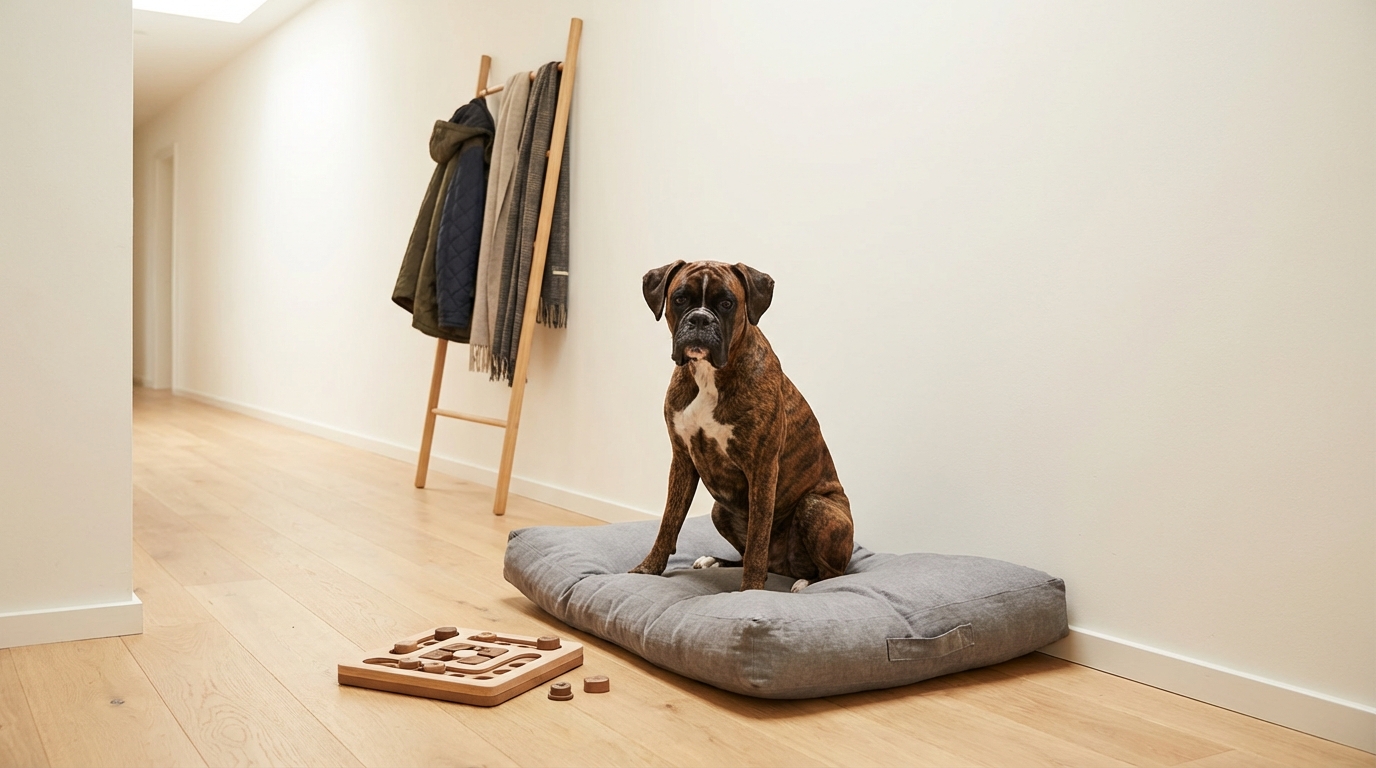
Independent enrichment keeps your dog's brain busy. Puzzle feeders, lick mats, and long-lasting chews give your dog something positive to focus on. Pair a special treat with your departure so leaving becomes a good thing.
Exercise before you leave helps burn off nervous energy. A tired dog is more likely to settle. A brisk walk or play session 30–60 minutes before departure can lower baseline stress levels.
Avoid dramatic goodbyes. Long, emotional farewells can amp up your dog's arousal. Keep departures and arrivals low-key — a calm pat is plenty.
Create a safe space. Some dogs do better in a specific room or area that feels secure. Leave a worn T-shirt nearby so your scent is present even when you're not.
Calming Products Worth Trying
Behavioral training works best when combined with tools that lower your dog's stress baseline. Browse our full range of dog care products for options designed to support anxious pets.
Pheromone diffusers and collars release a synthetic version of the calming pheromone nursing mothers produce. Adaptil is one of the most widely recommended pheromone-based solutions — available as plug-in diffusers, sprays, and collars that provide continuous comfort throughout the day.
Calming supplements containing ingredients like L-theanine, tryptophan, or casein can take the edge off mild to moderate anxiety. They're easy to add to your dog's routine and generally well tolerated.
Compression wraps apply gentle, constant pressure to the torso, similar to swaddling a baby. Some dogs respond remarkably well to these during alone time.
Every dog is different, so it may take some experimentation to find the combination that works. The key is consistency — give each approach enough time to show results before switching.
Frequently Asked Questions
Can dogs outgrow separation anxiety on their own?
Some puppies naturally become more independent as they mature, but established anxiety in adult dogs rarely resolves without intervention. Structured desensitization, environmental management, and calming support are usually necessary to see lasting improvement.
Does crate training help with separation anxiety?
It depends on the dog. A crate can feel like a safe den for some dogs, but for others with severe anxiety it can increase panic and lead to injury from escape attempts. If your dog hasn't been positively crate-trained, forcing confinement during anxious episodes is not recommended.
How long does it take to see improvement?
Mild cases may improve within a few weeks of consistent training and calming product use. More severe cases can take several months of gradual desensitization. Patience and consistency matter far more than speed.
Separation anxiety is stressful for the whole household, but it's also one of the most manageable behavioral issues once you commit to a plan. If your dog's anxiety is severe or not responding to the approaches above, a conversation with your vet can help rule out underlying medical issues and guide next steps. Ready to explore calming support? Shop our full range of dog products and find what works for your pup.