

Wondering when your dog is considered a senior? The answer depends on size, breed, and overall health, but there are reliable age ranges and everyday changes you can watch for. Knowing what’s typical (and what’s not) helps you support comfort, mobility, and long-term wellness as your dog enters their later years.
Medical note: This article is for general education and isn’t a substitute for veterinary care. If you notice ongoing changes—like worsening stiffness, weight loss, dental pain, coughing, fainting, repeated vomiting/diarrhea, new lumps, or behavior changes—schedule a veterinary visit. Many dogs benefit from senior wellness exams and screenings (such as lab work and dental evaluations) to catch issues early.
So, when is a dog senior?
“Senior” isn’t one exact birthday. In general, smaller dogs tend to reach their senior years later than large and giant breeds. Use these ranges as a starting point, then adjust based on your dog’s body condition, activity level, and any chronic health conditions.
- Small breeds: often around 10–12 years old
- Medium breeds: often around 8–10 years old
- Large breeds: often around 6–8 years old
- Giant breeds: sometimes as early as 5–7 years old
Two dogs of the same age can look very different. A lean, well-conditioned dog may stay more comfortable and mobile longer than a dog carrying extra weight. If you’re unsure where your dog falls on the “adult-to-senior” spectrum, your vet can help you estimate a life-stage plan and decide how often to schedule checkups.
Early signs to watch for at home
Early aging changes can be subtle—and easy to miss if they happen gradually. Instead of focusing on one off-day, watch for patterns that last a few weeks, show up in specific situations (like stairs or slick floors), or keep returning after activity.
- Slower start-ups: stiffness after naps, taking longer to stand, or seeming “tight” first thing
- Less endurance: shorter walks, more frequent breaks, or choosing to head home earlier
- Sleep changes: more daytime naps, deeper sleep, or pacing/restlessness at night
- Behavior shifts: less interest in play, more clinginess, or irritability when touched in certain spots
- Appearance changes: graying around the muzzle, a drier coat, or slower grooming/shedding cycles
A simple “before and after” note can be surprisingly useful. Track what changed, when you first noticed it, and what seems to trigger it (cold mornings, longer walks, or jumping into the car). That record makes it easier to explain the timeline to your vet and to recognize whether things are stable, improving, or progressing.
Quick tip: Record a 10–15 second phone video of your dog walking, sitting, and standing once a month. Gradual mobility changes are often easier to spot over time than day to day.
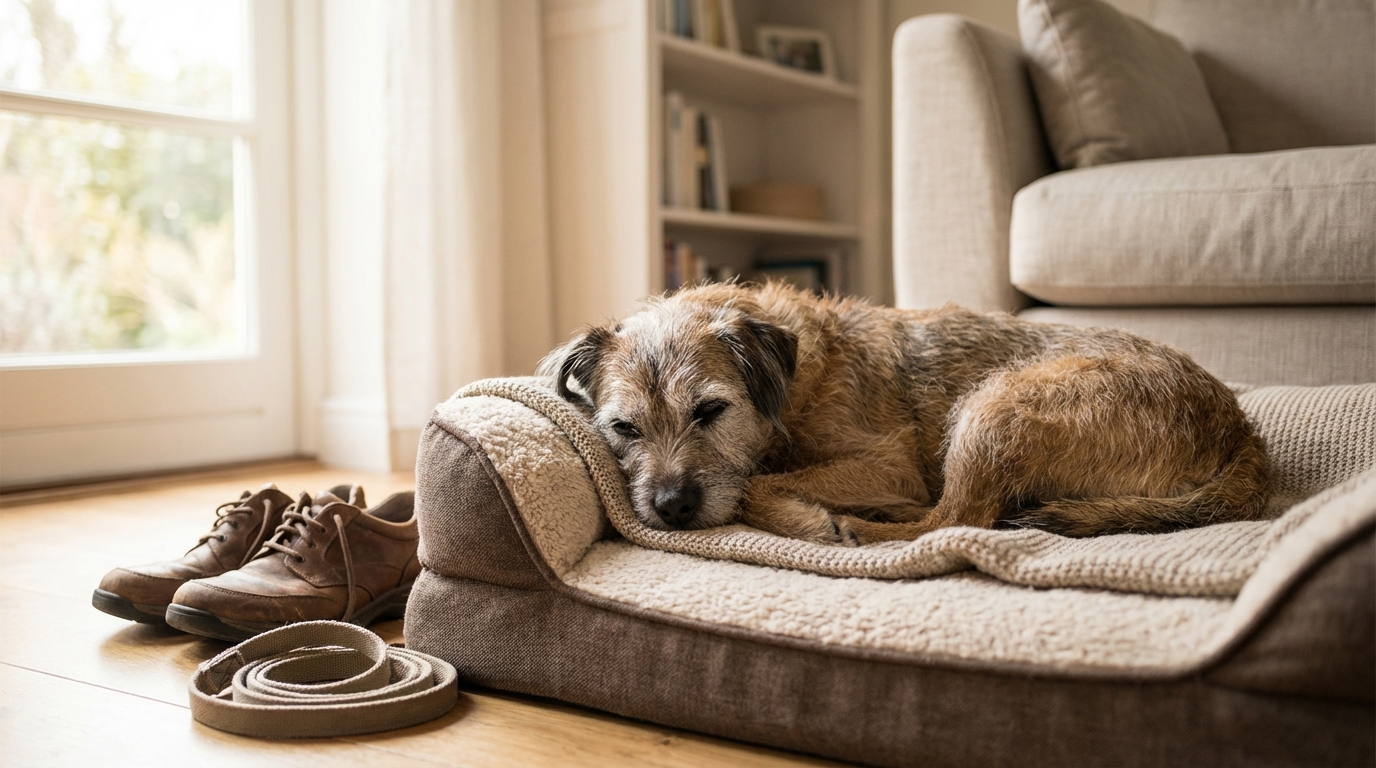
Common senior health shifts (and what they can mean)
Aging doesn’t automatically mean disease, but it can lower the body’s “reserve.” That means small issues may become more noticeable and recovery after exertion may take longer. The goal isn’t to panic—it’s to notice trends early and adjust routines before discomfort builds.
- Mobility and joint comfort: hesitation jumping up, slowing on stairs, slipping on smooth flooring, or struggling to get comfortable can suggest reduced joint flexibility or soreness.
- Weight and muscle changes: some older dogs gain weight on the same calories, while others lose muscle and look thinner over the spine or hips.
- Dental wear or mouth pain: bad breath, pawing at the mouth, chewing on one side, dropping kibble, or reluctance to take hard treats can point to oral discomfort.
- Vision and hearing changes: startling more easily, not responding to familiar cues, or bumping into objects in low light.
- Digestive and bathroom changes: constipation, accidents, changes in stool quality, or new sensitivity to certain foods.
If any of these changes are persistent, worsening, or affecting daily life, involve your vet sooner rather than later. Senior wellness exams commonly include a full physical exam plus screening such as bloodwork/urinalysis, and dental assessment as needed. These tools can help clarify whether you’re seeing normal aging, pain that needs treatment, or an underlying medical problem.
How to adjust daily care for a senior dog
Supporting an older dog usually comes down to small, consistent upgrades that make daily life easier—without letting activity drop to zero. Think comfort, predictability, and maintaining strength while reducing strain.
- Make movement easier: add rugs or runners for traction and consider a ramp for the couch or car if jumping looks hesitant.
- Choose shorter, more frequent exercise: two or three easier walks often beat one long outing. Let your dog set the pace.
- Build in warm-ups: start slow for the first few minutes, then gradually increase pace to reduce stiffness.
- Keep minds busy: sniff walks, puzzle feeding, and gentle training games can help seniors stay engaged.
- Upgrade rest: a supportive bed in a quiet, draft-free spot can improve sleep quality and make getting up easier.
Don’t overlook nails and paws. Long nails can reduce traction and subtly change gait, which may add stress to joints. If your dog resists nail trims or seems painful on certain floors, your vet or groomer can help you find a low-stress routine.
Parasite prevention: keeping protection consistent as dogs age
Fleas, ticks, and heartworm aren’t just annoying—they can add avoidable stress through itching, skin irritation, and fatigue. Older dogs may have less wiggle room to bounce back from secondary problems like hot spots from scratching or discomfort from skin inflammation.
The most practical strategy is consistency. Choose a routine you can reliably maintain and avoid gaps that can be easy to miss during busy months. Many households use year-round protection to simplify scheduling, while others adjust seasonally based on risk. If you’re not sure what makes sense for your situation, ask your veterinarian—especially for heartworm prevention, which often requires veterinary guidance around testing and timing.
You can browse vet-grade prevention options in our dog health store and compare formats that fit your routine (topicals, chews, or collar-based options). If your dog has sensitive skin, a history of stomach upset, or multiple pets in the home, look for an option that matches your household’s needs—and confirm the best fit with your vet if your dog has other medical conditions.
Frequently Asked Questions
Is gray hair the main sign my dog is becoming a senior?
Graying around the muzzle is common, but it’s only one clue. Changes in stamina, comfort during movement, sleep patterns, and recovery after activity often tell you more about how your dog is doing day to day. If you’re seeing multiple changes at once, a checkup can help you separate normal aging from a treatable problem.
My dog still plays hard—can they be a senior anyway?
Yes. Many dogs keep a playful personality well into later life, especially if they’ve stayed lean and active. Being in a senior age range doesn’t mean your dog has to “act old”—it just means it’s smart to support comfort and allow more recovery time after big bursts of activity.
What’s the most practical thing I can do this month for my aging dog?
Pick one measurable habit and stick with it: monthly weight checks, weekly nail and paw checks, a simple mobility video, or a consistent parasite-prevention schedule. If anything you track is trending in the wrong direction (like ongoing weight loss, increasing stiffness, or mouth discomfort), schedule a veterinary visit.
When you’re ready to support your dog’s next life stage, explore preventive essentials in the Sierra Pet Meds dog shop. If you’re unsure which option fits your dog’s age and health history, talk with your veterinarian.