

Choosing the right senior dog food can make everyday life easier for an aging pup—supporting comfortable movement, steadier energy, and predictable digestion. As dogs get older, their metabolism, muscle mass, and tolerance for certain ingredients can change, which means yesterday’s bowl may not be the best fit today. Here’s how to adjust your approach so your senior dog nutrition matches their new normal.
When is a dog considered “senior”?
“Senior” isn’t a single age for every dog. Body size, genetics, and lifestyle all influence when aging changes show up—some dogs slow down earlier, while others keep a puppy-like pace for years.
Instead of relying on the calendar, watch for patterns that suggest it’s time to rethink your current feeding plan: a little less stamina on walks, stiffness after resting, gradual weight gain, picky eating, or changes in stool quality. If you’re noticing two or more changes for more than a couple of weeks, it’s reasonable to evaluate their food and routine.
If your dog has a medical condition (or is on long-term medication), ask your veterinarian before making major diet changes. Some health issues call for specific nutrient targets that differ from a typical senior formula.
How nutrition needs change with age
Senior dog nutrition is often about protecting lean muscle, supporting joints and the immune system, and keeping digestion smooth. Most older dogs do best with a careful balance: not too many calories, but plenty of high-quality nutrients.
- Calories often need adjusting. Many seniors burn fewer calories due to lower activity and metabolic changes. The goal is preventing gradual weight gain without underfeeding.
- Protein still matters—often more than you think. Older dogs can lose muscle more easily, especially if they eat too little protein or too few total calories. Look for a formula that prioritizes quality animal protein, unless your vet has advised otherwise.
- Digestive tolerance can shift. Some seniors handle fat less efficiently or become sensitive to certain ingredients. Consistent stool quality and reduced gas are good signs you’ve found the right fit.
- Joint and mobility support becomes a bigger deal. Extra weight stresses joints, and age-related wear can make movement uncomfortable. While nutrition won’t resolve underlying joint disease on its own, keeping your dog lean and choosing a balanced diet can help support everyday comfort and mobility.
- Dental changes can affect appetite. Sore teeth or gum disease may make crunchy food harder to manage. Food texture and moisture become part of the nutrition plan.
Because senior needs are so individual, the “best” plan is the one that keeps your dog at a healthy body condition, with steady energy and predictable digestion.
How to choose the right food and format
Start with a high-quality senior dog food (or an “all life stages” option that fits your dog’s current condition). The ideal choice depends on whether your dog is overweight, underweight, picky, or dealing with mobility or dental changes.
- For weight gain: Choose a moderate-calorie diet with satisfying protein and fiber. Avoid constant treats “because they’re older,” since extra calories add up quickly.
- For muscle loss or being underweight: Prioritize calorie density and palatability using measured portions. You may need a more nutrient-dense formula rather than simply feeding larger volumes.
- For sensitive digestion: Look for simpler ingredient lists, consistent protein sources, and fiber that supports stool quality. Transition slowly to avoid upsetting the gut.
- For dental wear or picky eating: Consider smaller kibble, a softer texture, or adding warm water to improve aroma and ease chewing.
Quick tip: Transition any new food over 7–10 days—mixing increasing amounts of the new diet with the old to reduce stomach upset.
Don’t overlook hydration. Many seniors benefit from added moisture in meals, especially if they’re not enthusiastic water drinkers or if dry kibble is their main diet.
If you’re unsure whether to pick a senior formula or a standard adult option, focus on outcomes: stable weight, good stool quality, and consistent appetite. Those day-to-day signs matter more than the label on the bag.
Portions, schedule, and weight management
Even the “perfect” formula can miss the mark if portions are off. For most seniors, feeding the right amount consistently is what helps support joint comfort and stable energy.
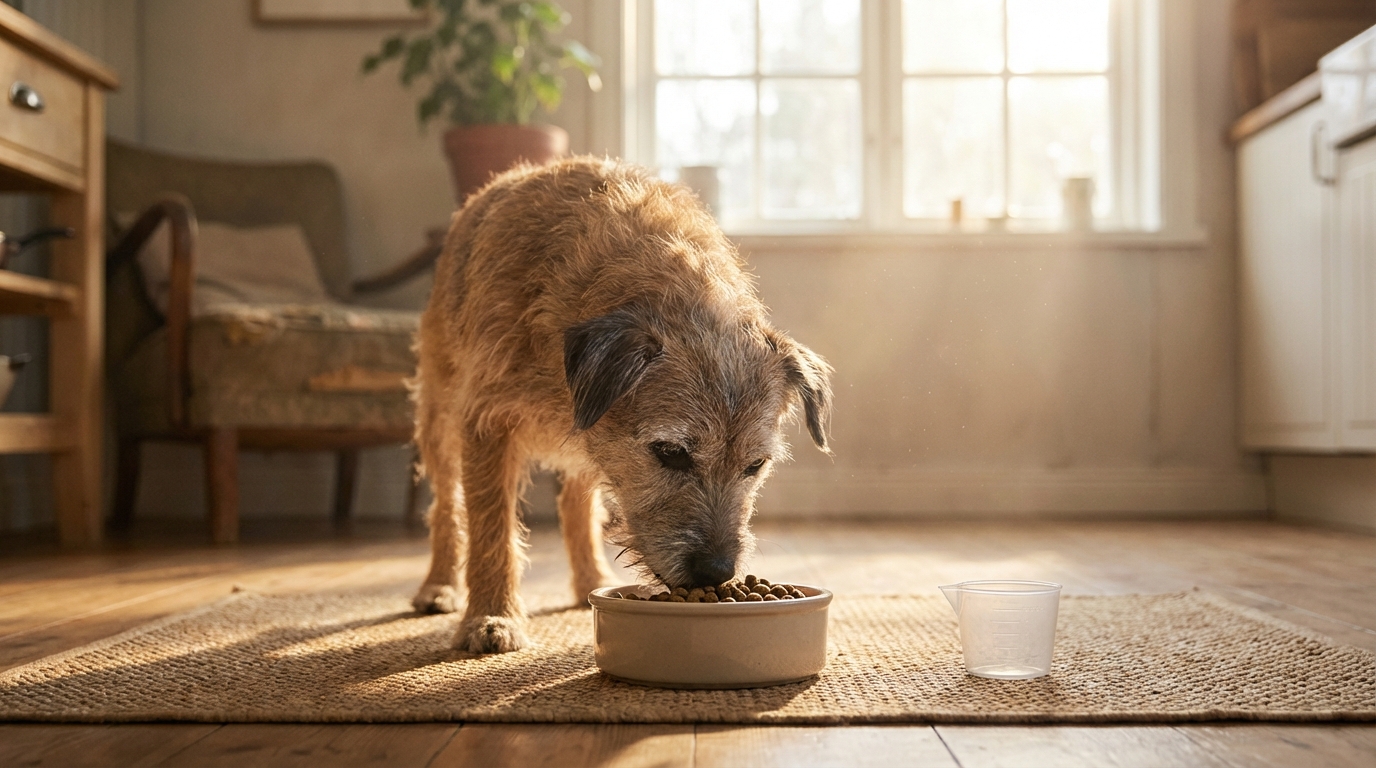
- Measure meals. Use a measuring cup or kitchen scale so portions don’t creep up over time.
- Split into 2–3 meals. Smaller meals can be easier on digestion and may help dogs that get nauseous on an empty stomach.
- Track body condition, not just weight. You should be able to feel (not see sharply) the ribs, and your dog should have a visible waist from above.
- Use treats strategically. Keep treats small and count them as part of daily calories. If training is important, use tiny pieces or reserve part of the regular meal as “treats.”
If a diet for older dogs that used to work now leads to weight gain, start with a modest portion adjustment and fewer extras. If that’s not enough, a different formula with a more suitable calorie density may make portioning easier while keeping meals satisfying.
Simple portion-adjustment example: If your dog’s weight is creeping up and your vet agrees it’s not due to an underlying medical issue, reduce the daily food amount slightly (rather than making a big cut), keep treats consistent, and reassess body condition in about two weeks. If nothing changes, make one more small adjustment or revisit the food choice. Small, measured changes are typically easier on digestion and help you avoid over-correcting.
Body condition mini-guide (easy at-home check)
Scale weight doesn’t tell the whole story for seniors—especially when muscle loss and fat gain can happen at the same time. A quick body condition check helps you decide whether your feeding plan is on track.
- Ribs: Run your hands along your dog’s ribcage. You should feel ribs with light pressure, but they shouldn’t be sharply visible.
- Waist (top view): Look down at your dog standing. There should be a clear waist behind the ribs (an “hourglass” shape), not a straight tube.
- Tuck (side view): From the side, the belly should tuck up behind the ribcage. A hanging belly can mean extra fat, but it can also be related to posture or other factors—so use all three checks together.
Two helpful reminders for older dogs: (1) a little extra weight can significantly increase joint strain, and (2) sudden muscle loss, especially over the back and thighs, is worth bringing up with your veterinarian even if overall weight looks “normal.”
Common senior feeding problems (and fixes)
Aging dogs can develop eating patterns that feel confusing: they beg but don’t finish meals, they eat fast then get an upset stomach, or they suddenly refuse a food they used to love. The key is matching the solution to the most likely cause—and getting help when signs don’t improve.
- Picky eating: Keep a consistent schedule, limit table scraps, and warm the food slightly (or add warm water) to boost aroma. Avoid rotating foods too quickly, which can create more pickiness and digestive upset.
- Constipation or inconsistent stools: Ensure steady hydration and consider a diet with appropriate fiber. Sudden changes in stool, especially with straining, should be taken seriously.
- Frequent gas or stomach upset: Slow transitions, simpler formulas, and splitting meals can help. If symptoms persist, it may signal intolerance or another issue worth discussing with your veterinarian.
- Rapid weight gain or loss: Re-check portions, treat calories, and activity. Unplanned, significant weight changes are a strong reason to reassess the feeding plan promptly.
- Eating too fast: Use a slow feeder bowl or scatter feeding with kibble in a snuffle mat to reduce gulping.
- Stiffness that affects mealtimes: Some dogs hesitate to reach down to eat or stand comfortably. Raising the bowl slightly, improving traction underfoot, and keeping your dog lean can help. If you’re considering adding joint supplements (such as glucosamine or omega-3s), discuss it with your veterinarian first—especially if your dog takes long-term medications or has ongoing health conditions.
Senior dog nutrition works best when it’s boringly consistent: a reliable food, measured portions, a stable routine, and regular check-ins on body condition.
Seek veterinary guidance sooner rather than later if your senior dog has ongoing vomiting or diarrhea, new trouble chewing, blood in stool, a sudden appetite change, or noticeable weight loss. Those signs may point to more than a routine feeding adjustment.
Frequently Asked Questions
Should I switch to a senior formula as soon as my dog turns “senior”?
Not necessarily. Some dogs do great on their current food if their weight, energy, and stool quality stay consistent. A senior formula makes sense when you’re seeing age-related changes like easier weight gain, reduced activity, or digestive sensitivity.
Is higher protein always better for older dogs?
Many seniors benefit from adequate, high-quality protein to help maintain muscle, but “more” isn’t always the goal. The best level depends on your dog’s body condition, appetite, and overall health, along with total calories.
How can I tell if I’m feeding the right amount?
Use body condition as your guide: you should feel the ribs without pressing hard and see a waist from above. If weight is slowly creeping up or down over a month, adjust portions slightly and re-check after two weeks.
If you’re updating your senior feeding plan, keep it simple: pick a quality formula, transition slowly, and measure portions for consistent results. For the best personalized diet for an older dog, talk with your vet about any major appetite, weight, or stool changes.