

Choosing the right supplements for senior pets can make day-to-day comfort easier to maintain as your companion slows down. The goal of ageing pet health support is simple: help joints move smoothly, keep the mind engaged, and protect digestion as the body changes. Below are practical, vet-style options to consider for older dogs and cats.
How to choose supplements for an older pet
Senior pets often have more than one issue at once: a bit of stiffness, shorter attention span, and a more sensitive stomach. Rather than stacking lots of products, start with the top one or two needs you see most days (for example, getting up after naps or occasional loose stools). This approach keeps your routine simple and makes it easier to tell what’s helping.
Look for supplements with clear, single-purpose ingredients and straightforward labeling. If you’re already using preventatives and other health products, keep a written list so you can avoid ingredient overlap and unnecessary doubles.
- Pick one main goal: joint comfort, cognitive support, or digestive balance.
- Choose a form your pet will take: chew, powder, capsule, or liquid.
- Track changes: energy, mobility, stool quality, appetite, and sleep.
Joint support supplements for stiff, senior joints
Mobility is a big part of quality of life, which is why joint formulas are among the most common senior dog supplements. The best options support cartilage, joint fluid, and normal inflammation response, helping older pets stay comfortable during everyday movement like stairs, jumping into the car, or longer walks.
Common joint-support ingredients you’ll see include glucosamine and chondroitin (popular building blocks for cartilage support), MSM (often used for joint comfort), and green-lipped mussel (a natural source of joint-supporting compounds). Omega-3 fatty acids (EPA/DHA) are also widely used to support a healthy inflammatory response and overall joint function.
- Glucosamine & chondroitin: often chosen for long-term cartilage and joint structure support.
- MSM: commonly paired with glucosamine for comfort and mobility support.
- Omega-3s (EPA/DHA): supports joint health and can benefit skin and coat at the same time.
- Green-lipped mussel: a natural option frequently used in joint blends.
If your pet is already on a complete senior diet, you may still find that targeted joint support helps with “first steps” stiffness. For easy browsing of dog-focused options, visit our dog shop.
Brain and cognitive support for senior pets
Older pets can show subtle mental changes: sleeping more, getting “stuck” in corners, slower response to cues, or seeming less interested in play. Supplements aimed at cognition typically focus on supporting brain cell membranes, circulation, and protection against normal age-related oxidative stress.
Ingredients commonly used for brain support include DHA (an omega-3 important for brain structure), antioxidants (such as vitamin E and other protective compounds), and medium-chain triglycerides (MCTs) (a type of fat used in some cognitive-support products). Some formulas also include calming-support nutrients to help take the edge off restlessness without making pets feel “knocked out.”
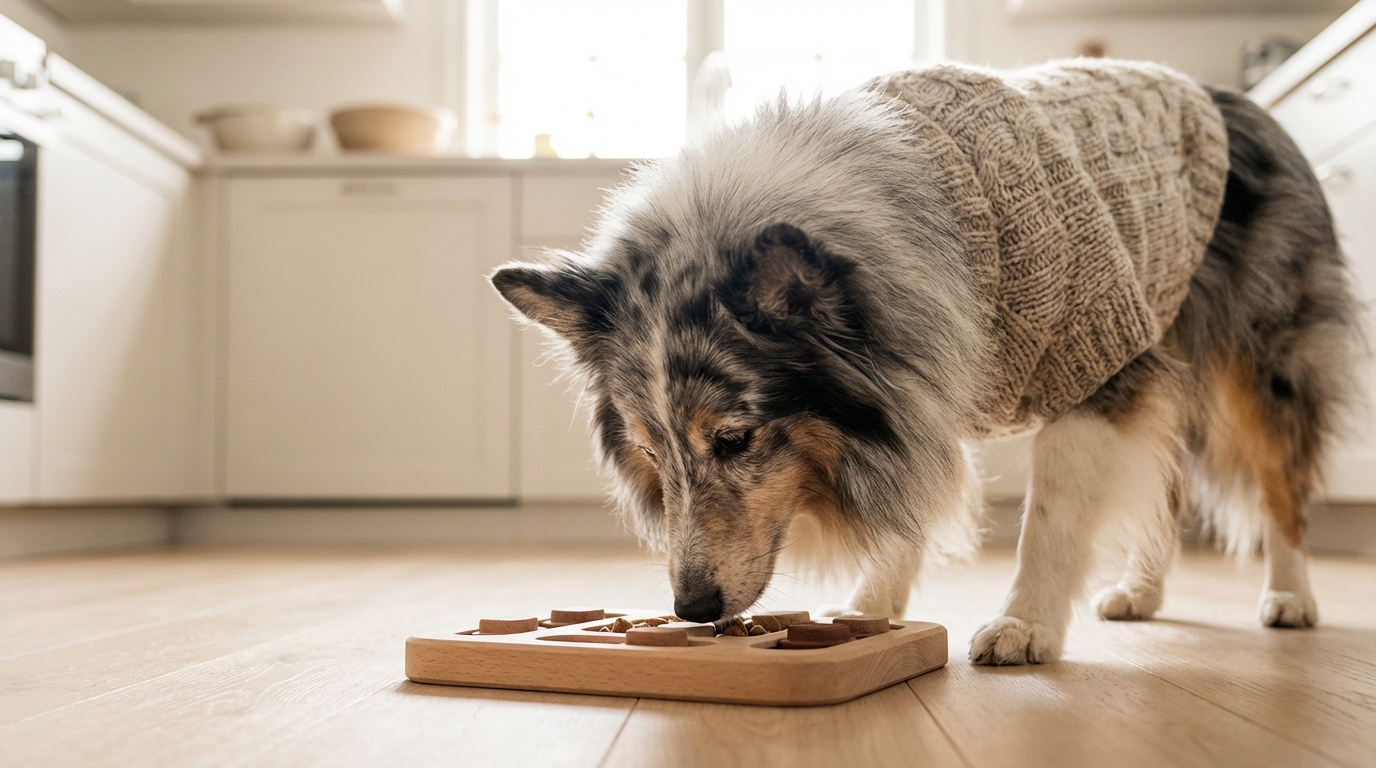
Quick tip: Pair cognitive supplements with a predictable routine—short training refreshers, puzzle feeders, and gentle sniff-walks often boost results because the brain needs exercise along with nutrition.
Cats can benefit from cognitive support too, especially if you notice changes in nighttime vocalizing or litter box habits. For cat-friendly wellness products and formats, browse our cat shop.
Gut health supplements for aging digestion
As pets age, digestion may become more sensitive, and you may see occasional gas, stool changes, or pickier eating. Gut-focused supplements can help maintain a stable digestive environment, support nutrient absorption, and encourage normal stool quality—key parts of overall ageing pet health.
Most digestive supplements fall into a few categories. Probiotics add beneficial bacteria, while prebiotics feed the helpful microbes already in the gut. Digestive enzymes support breaking down nutrients, and fiber blends can help normalize stool consistency (helpful for both occasional firmness and looseness, depending on the type of fiber used).
- Probiotics: support healthy gut flora balance during diet changes or stress.
- Prebiotics: nourish beneficial bacteria to help them thrive.
- Digestive enzymes: useful for older pets who seem to struggle with heavier meals.
- Targeted fiber: supports regularity and stool quality.
If your pet has a sensitive stomach, start with a single digestive-support product rather than mixing multiple gut supplements at once. Consistency matters: give it daily, keep treats steady, and avoid frequent food switches while you evaluate results.
Shopping checklist: quality, form, and safety
Not all supplements are created equal. When you’re shopping for supplements for senior pets, prioritize clarity and quality: recognizable ingredients, simple directions, and a product made for your species (dog vs. cat) and life stage.
Also think about the easiest delivery method. Chews are convenient, powders hide well in wet food, and liquids can be useful for pets with dental issues—choose what you can actually give every day.
- Species-specific formulas: avoid sharing dog products with cats unless the label clearly says it’s safe for both.
- Single-goal products first: easier to judge what works before adding combinations.
- Minimal “extras”: watch unnecessary fillers if your pet has allergies or a sensitive gut.
- Realistic expectations: supplements support normal function; they don’t replace a full care plan like weight management and appropriate exercise.
If you’re already building a senior wellness routine, consider bundling your essentials so you don’t miss days—especially if you’re also maintaining parasite protection and other health basics via dog products or cat products.
Frequently Asked Questions
How do I know which supplement to start with for my older pet?
Pick the concern that affects daily life most: mobility, digestion, or mental sharpness. Start one product at a time and track simple outcomes like ease of rising, stool consistency, and interest in play for a few weeks.
Can I give joint, brain, and gut supplements together?
Often, yes, but it’s smart to add them one at a time to avoid stomach upset and to understand which product is helping. Also check for overlapping ingredients (like omega-3s) so you don’t double up unnecessarily.
Are there signs a supplement isn’t a good fit?
Watch for new digestive upset, reduced appetite, or refusal to eat meals if the supplement changes taste or texture. If you notice unwanted changes, stop the new product and reassess your options.
Ready to support your pet’s comfort and routine? Shop senior-friendly essentials in our dog and cat collections, and if your pet has complex health conditions, chat to your vet before starting something new.