

Bringing home a kitten is exciting—and a little chaotic if you don’t have a plan. This new kitten checklist walks you through what to do (and what to ignore) so your kitten’s first week feels calm, safe, and predictable. A little setup now prevents most common “first-night” stress, litter box mishaps, and scratchy surprises. Use it as a quick checklist for day one through day seven.
Set up before your kitten arrives
Your kitten doesn’t need the whole house on day one—start with one quiet “home base” room. Choose a low-traffic space with a door (or a barrier) so your kitten can decompress without being chased by kids, guests, or other pets.
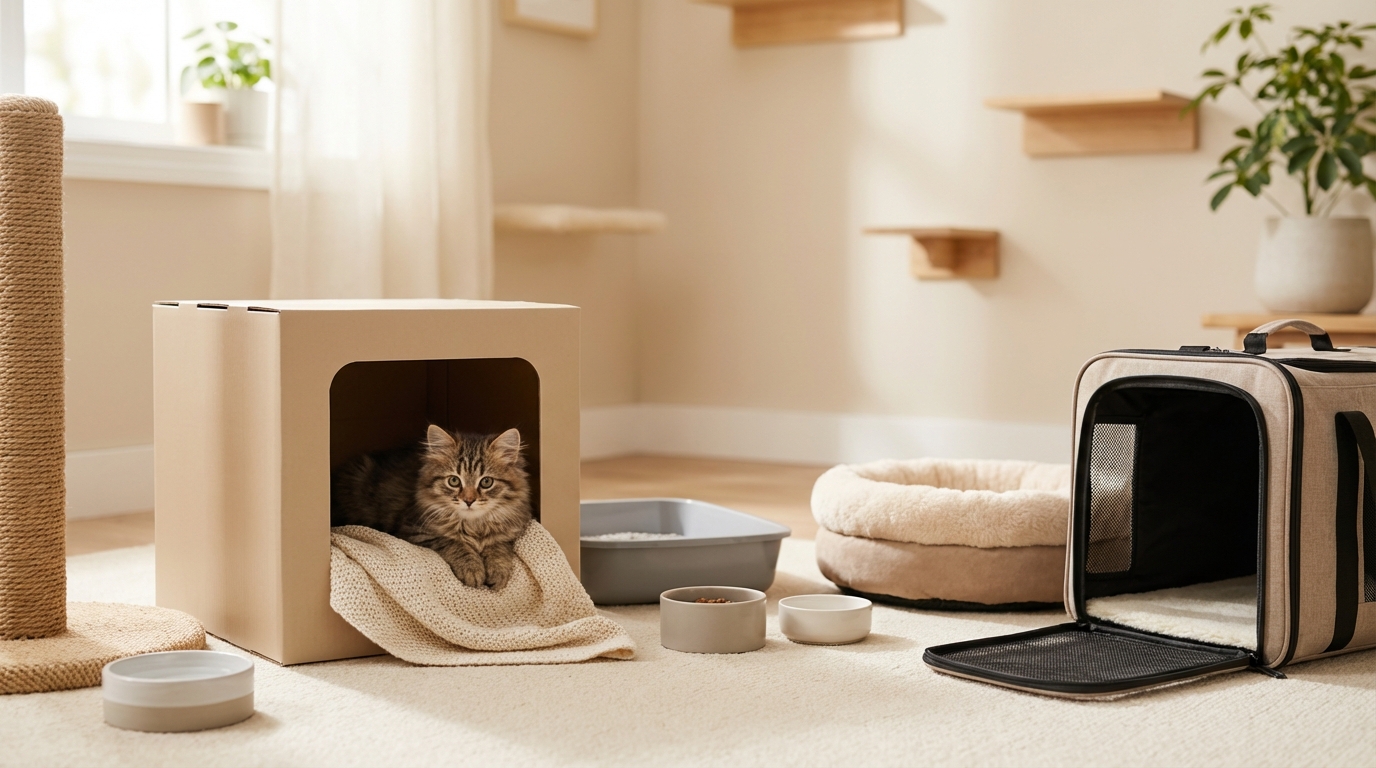
Focus on kitten essentials that reduce stress and keep habits predictable: a litter box, food and water bowls, a cozy bed, a carrier, scratching surfaces, and a few toys. If you’re shopping for vet-grade preventives and everyday care items in one place, you can browse the cat collection at our cat shop.
- Litter box: Low entry, unscented litter, and place it away from food and water.
- Food + water: Keep the same food at first; introduce changes gradually over 7–10 days.
- Scratching setup: One vertical scratcher + one horizontal option so your kitten can show preferences.
- Safe hide: Covered bed or a box with a blanket so your kitten can retreat.
- Kitten-proofing: Hide cords, remove toxic plants, secure small swallowable items, and block tight gaps behind appliances.
Day 1: The first hour and first night
When you bring your kitten home, go straight to the home base room and open the carrier door. Let your kitten come out on their own time. Keep voices soft, movements slow, and limit introductions to one person at a time.
Within the first hour, show the litter box location and offer a small meal and water. Don’t force play or cuddles—curiosity is a good sign, but hiding is normal too. For the first night, keep the room warm and quiet, and consider leaving a night light so your kitten can find the litter box easily.
- If your kitten cries at night: Avoid repeated pick-ups that turn crying into a habit; instead, offer a calm check-in and a soft toy.
- If accidents happen: Clean thoroughly and move the litter box closer temporarily, then shift it slowly.
- If they won’t eat: Stress can reduce appetite. Offer the familiar food from their previous home first.
Days 2–3: Stabilize the basics
Days two and three are about building predictability. Keep your kitten’s world small enough to feel safe, but consistent enough to build good habits fast.
- Feeding routine: Keep meal times consistent. If you plan to change foods, start a slow transition (mixing old and new) rather than an overnight swap.
- Litter box success: Scoop at least daily. If your kitten misses the box, reduce roaming space again and add a second box if needed.
- Short play sessions: Aim for two to four brief sessions with wand toys or soft balls. End with a small meal to encourage rest.
- Quiet social time: Sit on the floor and let your kitten come to you. Reward calm curiosity with gentle praise and a tiny treat.
Quick tip: Place a scratcher right next to the spot your kitten tries to scratch (like a couch corner). Reward the scratcher with praise and a tiny treat, and use a furniture cover temporarily instead of punishment.
Days 4–7: Expand confidence and manners
Once your kitten is reliably eating, using the litter box, and exploring the home base, you can start expanding their world in small, positive steps. Think “one new thing at a time,” not a full house tour.
- Gradually increase space: Open one additional room at a time, ideally after a play session when your kitten is relaxed.
- Start gentle handling practice: Briefly touch paws, ears, and mouth, then reward. This helps with future nail trims and vet exams.
- Carrier comfort: Leave the carrier out with a blanket inside so it becomes a nap spot, not a “bad news” box.
- Nail maintenance: Trim just the sharp tips, one or two nails at a time, when your kitten is sleepy.
- Introduce other pets slowly: Do scent swaps first (blanket-to-blanket), then brief supervised visuals. Allow direct contact only when everyone is calm.
The easiest way to make the kitten first week smoother is to get consistent fast: same feeding times, same litter box spot, and short play sessions every day. Predictability helps your kitten relax and helps you spot changes (like reduced appetite or diarrhea) sooner.
Health, safety, and parasite prevention
Even indoor-only kittens can encounter fleas and other parasites through people, visitors, or other pets in the home. Early prevention is part of smart kitten essentials—especially when you’re building routines that will last into adulthood.
Medical note: Parasite prevention isn’t one-size-fits-all. The right product and timing depend on your kitten’s age, current weight, overall health, and local parasite risk. Many preventives have minimum age and/or weight requirements (often around 6–8 weeks and a minimum weight), so read labels carefully and confirm your plan with a veterinarian—especially for very young, small, or recently ill kittens.
Start by checking your kitten’s coat for flea dirt (tiny black specks) and looking for excessive scratching, scabs, or hair loss. Keep bedding clean, vacuum regularly, and wash soft items your kitten sleeps on. When you’re ready to choose prevention products, explore options in our cat shop and select items labeled for your kitten’s age and weight range.
- Not all kittens can start all preventives immediately: If your kitten is under the minimum age/weight for a product, ask your vet what to do in the meantime (environmental cleaning, combing, and a safe timeline).
- Match prevention to real risk: Some households need flea and tick control, some need heartworm prevention, and some need both. Your vet can help you choose a practical plan based on exposure and lifestyle.
- Use cat-specific products only: Never use dog-only parasite products on cats. Follow label directions and avoid combining products unless your vet says it’s appropriate.
- Fleas and ticks: Choose cat-specific formulas and follow label directions.
- Heartworm prevention: Consider making it a monthly calendar reminder so you don’t miss doses.
- Microchipping and ID: If your kitten will ever slip through a door, an ID tag and microchip add a layer of protection.
Watch closely for red flags during the first week: repeated vomiting, refusing food for a full day, lethargy, labored breathing, or severe diarrhea. These warrant prompt attention.
Common first-week mistakes to avoid
Most first-week problems come from doing too much too fast. A kitten who seems “brave” can still get overwhelmed—stress often shows up later as hiding, vocalizing, or litter box issues.
- Too much space too soon: Start small, then expand territory as confidence grows.
- Changing food immediately: Sudden switches can trigger stomach upset; transition gradually.
- Skipping scratch training: Provide multiple scratch options early and reward correct use.
- Overhandling: Let your kitten set the pace; short positive interactions beat long forced cuddles.
- Using harsh cleaners on accidents: Strong ammonia-like smells can attract repeat marking; use a pet-safe enzymatic cleaner.
- Buying random “kitten essentials” without a plan: Prioritize litter, food, scratchers, and prevention first—extras can wait.
Frequently Asked Questions
How long does it take for a kitten to settle in?
Many kittens start exploring within 24–72 hours, but full confidence can take a couple of weeks. Keep the routine steady and give your kitten a quiet retreat space they can always access.
What should I do if my kitten won’t use the litter box?
Place your kitten in the box after meals and naps, keep the litter unscented, and make sure the box is easy to enter. If there are repeated accidents, reduce their space temporarily and confirm the box is clean and in a low-stress location.
When can my kitten meet other pets?
Start with scent introductions right away, then progress to brief supervised visuals once your kitten is eating, playing, and using the litter box reliably. Move at the calmest pet’s pace and separate if anyone shows fear or aggression.
What should I buy before bringing home a kitten?
Start with the basics: litter box and litter, food and water bowls, kitten-appropriate food, a carrier, a bed or hide, scratchers, and a few toys. For a smoother first week, stock up on core care items and trusted preventives in our cat shop. If you’re unsure what’s right for your kitten’s age, size, or health history, chat to your vet.