

Learning how to bathe a cat can feel like preparing for battle, but it doesn't have to be stressful for either of you. Most cats handle their own grooming, yet there are times when a proper bath is unavoidable — whether they've rolled in something unpleasant, have a skin condition, or need help with a flea treatment routine. With the right preparation and technique, bath time can be calm, quick, and even uneventful.
When Does a Cat Actually Need a Bath?
Cats are meticulous self-groomers, and most healthy adult cats rarely need a full bath. Their rough tongues and flexible spines handle daily dirt and loose fur remarkably well.
However, certain situations call for a hands-on wash. If your cat has gotten into something sticky, greasy, or potentially toxic, a bath is essential for safety. Cats with mobility issues, obesity, or arthritis may also struggle to groom hard-to-reach areas and benefit from occasional bathing.
Skin conditions like dermatitis or fungal infections sometimes require medicated baths as part of a treatment plan. And if your cat has recently had a flea and tick treatment, you may need to time baths carefully to avoid washing away topical products before they fully absorb.
Gather Your Supplies Before You Start
The secret to a smooth cat bath is having everything within arm's reach before the water turns on. Once your cat is wet, you won't be able to rummage through cabinets without losing control of the situation.
Here's what you'll need:
- Cat-specific shampoo — never use human shampoo or dog products, as the pH balance is wrong for feline skin
- A non-slip mat — placed in the sink or tub to give your cat something to grip
- A jug or handheld sprayer — for controlled, gentle rinsing
- Several towels — at least two: one for the bottom of the bathing area and one (or more) for drying
- Cotton balls — to loosely place in your cat's ears to prevent water from entering the ear canal
- Treats — for positive reinforcement before, during, and after
A kitchen sink or laundry basin often works better than a full bathtub. The smaller space feels less overwhelming for most cats, and it puts them at a comfortable working height for you.
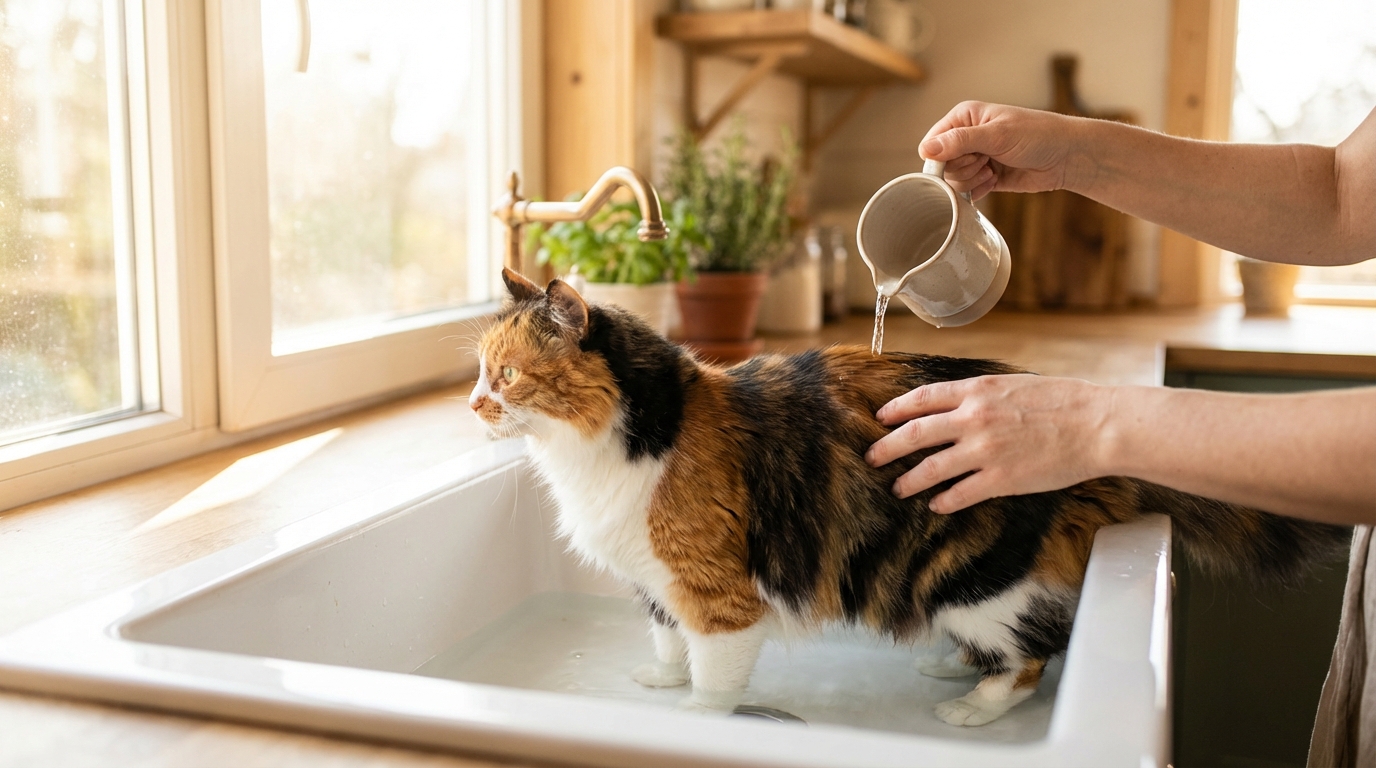
Step-by-Step: How to Bathe Your Cat
Trim nails first. This is a non-negotiable safety step. Even the calmest cat may scratch when startled by water. Trim those claws a day or two before bath day so your cat isn't dealing with two stressful events back to back.
Brush out tangles. Matted fur traps water and shampoo against the skin, which can cause irritation. A quick brush session removes loose hair and makes the whole process faster.
Fill with lukewarm water. Run a few inches of warm — not hot — water into the basin before bringing your cat in. The sound of running water is one of the biggest stress triggers, so minimizing it helps enormously.
Wet the body, not the face. Use your jug or sprayer to gently wet your cat from the shoulders back. Avoid spraying the head directly. For the face, use a damp washcloth to carefully wipe around the eyes, ears, and chin.
Lather and rinse thoroughly. Apply a small amount of cat shampoo and work it through the coat with gentle, massaging motions. Rinse completely — leftover shampoo residue can cause itching and flaky skin. If you feel any resistance in the coat, rinse again.
Quick tip: Keep the entire bath under ten minutes. Speed matters more than perfection. A fast, calm bath is far better for your cat than a thorough one that leaves them panicked and distrustful of future grooming sessions.
Talk softly throughout. Your voice is a powerful calming tool. Speak in a low, steady tone and avoid sudden movements. If your cat becomes extremely distressed — hissing, yowling, or thrashing — it's okay to stop, towel off, and try again another day.
Drying and Post-Bath Care
Wrap your cat in a large, warm towel immediately after the bath. Gently press — don't rub — the towel against their coat to absorb excess water. Most cats tolerate towel drying well, especially if you've pre-warmed the towel.
Avoid using a hair dryer unless your cat has been desensitized to the noise. The combination of heat, loud sound, and forced air is terrifying for most felines. If you must use one, set it on the lowest heat and speed setting and keep it at a safe distance.
After drying, let your cat retreat to a warm, draft-free room where they can finish air-drying and groom themselves in peace. This is the perfect time to offer a high-value treat or a bit of wet food as a reward.
If your cat is on a topical worming treatment or flea prevention, wait at least 48 hours after application before bathing — or 48 hours after a bath before applying product. This ensures the treatment has time to absorb through the skin oils properly.
Keeping Your Cat's Skin and Coat Healthy Year-Round
Bathing is just one small part of maintaining a healthy coat. Regular brushing — even weekly for shorthaired cats — removes dead hair, distributes natural oils, and gives you a chance to check for parasites, lumps, or skin changes.
Consistent flea and tick prevention is equally important. Flea allergy dermatitis is one of the most common skin conditions in cats, and it only takes a single bite to trigger intense itching and hair loss in sensitive animals. Staying on top of parasite prevention reduces the need for emergency baths significantly.
A balanced diet also plays a major role. Cats that receive adequate omega fatty acids tend to have shinier, more resilient coats and fewer dry-skin issues. If your cat's coat looks dull or feels rough despite regular grooming, it may be worth reviewing their nutrition.
Frequently Asked Questions
How often should I bathe my cat?
Most healthy cats only need a bath a few times a year, if at all. Cats with skin conditions, long coats, or limited mobility may need more frequent bathing. Let your cat's individual needs guide the schedule rather than following a rigid timeline.
Can I use dog shampoo on my cat?
No. Dog shampoos can contain ingredients that are toxic or irritating to cats, including certain essential oils and insecticides. Always use a shampoo specifically formulated for cats to avoid adverse reactions.
What if my cat absolutely refuses to be bathed?
Some cats simply will not tolerate water, and forcing the issue can damage your bond and cause injury. Waterless cat shampoos and grooming wipes are effective alternatives for spot-cleaning. For medical baths that are truly necessary, consult your vet about sedation options or professional grooming assistance.
A clean, well-groomed cat is a more comfortable cat — and keeping up with parasite prevention means fewer emergency baths in the first place. Browse our full range of cat flea and tick products at Sierra Pet Meds to keep your feline's coat healthy and pest-free all year long.