

Understanding how eye sight develops in puppies and dogs helps you spot problems early and keep your pet comfortable at every life stage. Puppies are born with their eyes sealed shut, and the visual system continues maturing for weeks after they first open. Knowing what's normal — and what's not — can make a real difference in your dog's long-term quality of life.
How Newborn Puppies See the World
Puppies enter the world completely blind. Their eyelids remain fused shut for roughly the first 10 to 14 days, protecting delicate structures that are still forming beneath the surface.
During this sealed-eye stage, puppies rely entirely on touch, warmth, and smell to locate their mother and littermates. Even after the lids separate, the eyes appear cloudy and bluish-gray because the cornea is still clearing and the retina hasn't finished developing.
Bright light can actually harm these immature eyes, which is why responsible breeders keep whelping areas dimly lit during those first crucial weeks.
Key Vision Milestones From Birth to Adulthood
Days 1–14: Eyes are closed. Puppies navigate by scent and touch alone.
Days 14–21: Eyelids open gradually. Vision is blurry, and puppies can detect light and movement but not detail. You may notice a slight startle response to sudden brightness.
Weeks 3–5: Depth perception begins to develop. Puppies start following moving objects and recognizing familiar faces at close range. The cloudy blue tint fades as the iris gains its permanent color.
Weeks 5–8: Visual acuity sharpens considerably. Puppies coordinate sight with motor skills — chasing toys, navigating obstacles, and making deliberate eye contact.
Weeks 8–16: Vision approaches adult levels. By around 16 weeks, most puppies see the world roughly the way they will for the rest of their lives. Dogs see fewer colors than humans, primarily in shades of blue and yellow, but they excel at detecting motion and seeing in low light.
Quick tip: Keep very young puppies in a softly lit environment and avoid camera flashes or direct sunlight until their eyes are fully open and clear — usually around three to four weeks of age.
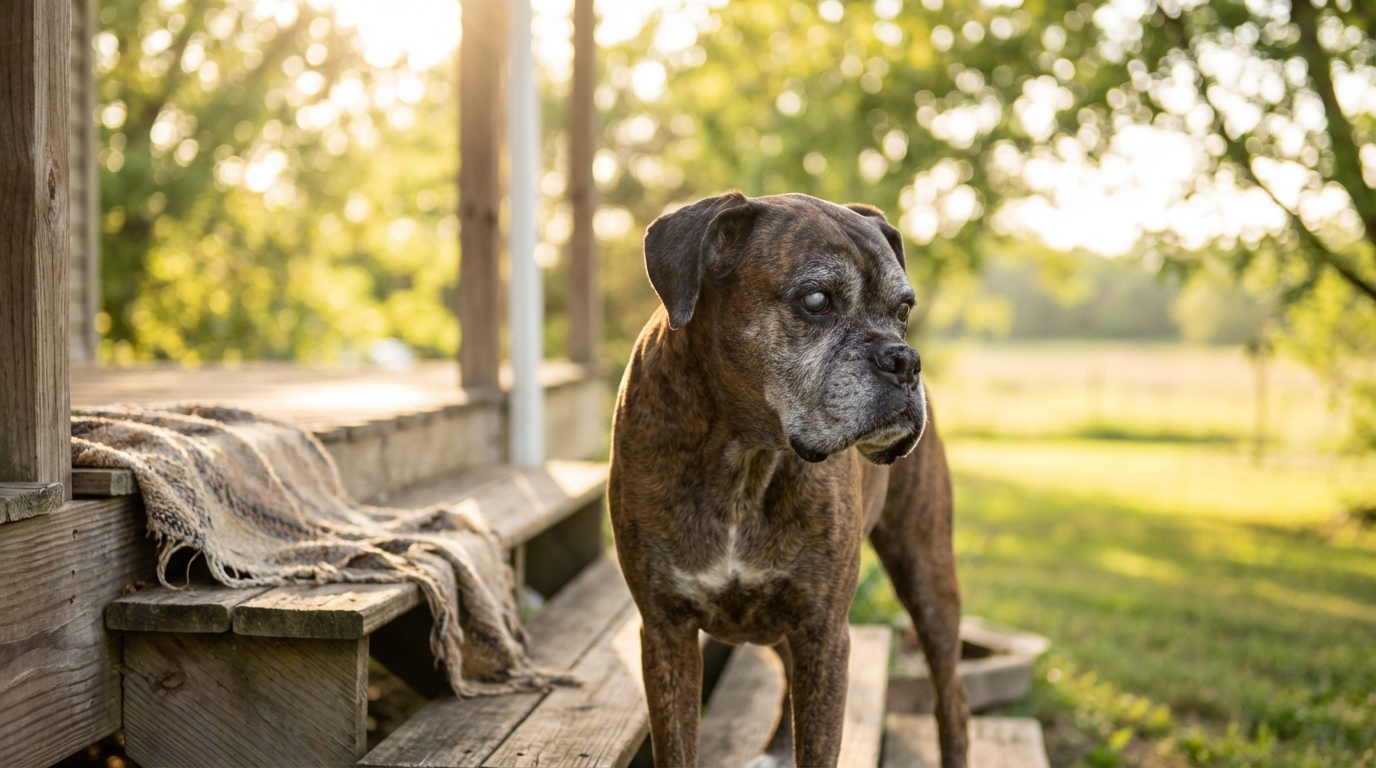
Common Eye Problems in Dogs
Some eye conditions appear during puppyhood, while others develop gradually as dogs age. Being aware of the most common issues helps you act quickly.
- Cherry eye: A prolapsed tear gland that appears as a red, fleshy lump in the inner corner of the eye. Certain breeds are more predisposed.
- Entropion: The eyelid rolls inward, causing lashes to scratch the cornea. Persistent squinting and tearing are telltale signs.
- Cataracts: A clouding of the lens that can appear at any age. Hereditary juvenile cataracts sometimes show up in puppies as young as a few months old.
- Progressive retinal atrophy (PRA): A degenerative condition that gradually reduces night vision first, then overall sight.
- Conjunctivitis: Inflammation of the tissue lining the eyelids, often caused by allergens, irritants, or infection.
External parasites like fleas and ticks can also irritate the delicate skin around your dog's eyes, causing excessive scratching that leads to secondary infections or corneal damage.
How to Protect Your Dog's Vision
Routine care goes a long way toward keeping your dog's eyes healthy throughout life. Gently wipe away discharge from the corners of the eyes with a damp, lint-free cloth each day.
Keep the hair around the eyes trimmed, especially in long-coated breeds. Hair that constantly brushes against the cornea can cause irritation and ulceration over time.
A balanced diet rich in antioxidants — particularly vitamins A, C, and E — supports overall eye health. Omega-3 fatty acids also contribute to healthy tear production.
Because parasites and the diseases they carry can affect many organ systems, including the eyes in rare cases, staying on top of heartworm prevention and broad-spectrum parasite control is another smart step toward whole-body wellness.
Signs Your Dog May Be Losing Eyesight
Dogs are remarkably good at compensating for declining vision, so changes can be subtle at first. Watch for bumping into furniture or hesitating at stairs, especially in dim lighting.
Reluctance to go outside at night, difficulty catching treats, or a sudden change in confidence level can all indicate visual decline. Cloudy, red, or unequally sized pupils are physical clues that warrant attention.
Dogs that begin startling easily when approached from the side may have lost peripheral vision. If you notice any of these behaviors, make a note of when they started and how often they occur — this information will be useful for your veterinarian.
Frequently Asked Questions
When can puppies see clearly?
Most puppies achieve near-adult visual clarity by around 8 weeks of age, with full development typically completing by 16 weeks. Before that, their vision is progressively sharpening from the moment the eyelids first open at about two weeks old.
Can dogs see in the dark?
Dogs can't see in total darkness, but they see far better than humans in low-light conditions. A reflective layer behind the retina called the tapetum lucidum amplifies available light, giving dogs a significant advantage at dusk and dawn.
Do dogs see color?
Dogs do see color, but their spectrum is more limited than ours. They perceive the world mainly in shades of blue, yellow, and gray — similar to a person with red-green color blindness. This is why many trainers recommend blue or yellow toys for fetch games.
Keeping your dog's eyes healthy is part of a bigger picture that includes regular parasite prevention and overall wellness. Browse our full range of dog health products to find the right protection for your pet — and chat to your vet if you notice any sudden changes in your dog's vision.